Have you ever stood at a point where you needed help, but could not see where it would come from?
Money was tight, a diagnosis was scary, or a decision felt too big. For many Christians, that is exactly when the name Jireh comes to mind.
But what is the Jireh meaning in the Bible, beyond a line in a worship song? The answer is richer than “God gives us things.” It begins with a Hebrew verb that means “to see,” and it comes from one of the most intense stories in Genesis.
In this guide, you will learn the Hebrew root, the story behind the name, how Christians connect it to Jesus, what it does not promise, and five simple ways to live it out.
What Does Jireh Mean in the Bible? The Short Answer
Jireh comes from the Hebrew phrase YHWH Yireh, which English Bibles usually translate as “The LORD will provide.” The longer form many people know is Jehovah Jireh, the King James rendering of that Hebrew phrase.
Abraham gave this name to a specific place in Genesis 22:14, right after God supplied a ram to take Isaac’s place.
Two things are worth remembering from the start:
- Jireh describes the character of the one true God. It is not a separate god.
- The name is tied to one real event, so it is best understood through that story rather than as a catchy slogan.
The Hebrew Behind Jireh: How “See” Becomes “Provide”
YHWH Yireh, Word by Word
The first part, YHWH, is the personal name of the God of Israel. Most English Bibles print it as LORD in capital letters. The second part, yireh, comes from the verb ra’ah, which means “to see.”
So a very literal reading would be “the LORD will see.” That sounds strange at first. How does seeing turn into providing?
Because Jireh is a Hebrew expression from the Old Testament, you do not need to hunt for a Greek root. The meaning lives in its Hebrew setting and in Genesis 22.
Three Layers of “Seeing”
Aaron Messner of Ligonier Ministries explains that this verb carries more than one level of meaning in the Old Testament:
- Sight: looking at something with your eyes.
- Understanding: seeing something rightly, so you grasp what it truly is.
- Commitment: “seeing to it,” which means taking responsibility to get it done.
In Genesis 22, “provide” carries all three. God notices the need, understands exactly what is required, and pledges Himself to meet it. That is why this kind of provision is more than a kind gift handed out from a distance.
Only One Verse Uses the Full Name
The full name Jehovah Jireh appears in just one verse of the Old Testament: Genesis 22:14. Many people first met it through the children’s song “Jehovah Jireh, My Provider,” and today the shorter word “Jireh” is common in worship music. The short form is a modern habit. The biblical anchor is still Genesis 22.
Read More: Angels and Spirits in the Bible: Who They Are, What They Do, and What Scripture Really Says
Is “Jireh” in the Bible by Itself?
Strictly speaking, the Bible gives us the full phrase, YHWH Yireh, in Genesis 22:14. The short word “Jireh” is how modern Christians often refer to it in songs, prayers, and everyday conversation.
That is not a problem, as long as you remember where it comes from. When you hear “Jireh” in a worship song, think of Abraham, Isaac, Moriah, and the ram. The word carries a whole story with it.
The exact name does not appear in the New Testament. What does continue there is the theme: God knows what His people need, and He cares for them (see Matthew 6 and Philippians 4:19).
The Story Behind the Name: Genesis 22 Step by Step
A Promised Son and a Hard Test
God had promised Abraham a son, and through his family, blessing for all nations (Genesis 12:1–3). Ligonier notes that Abraham waited about twenty-five years before Isaac was born.
Then God gave a shocking command: take your only son, whom you love, to the land of Moriah and offer him there as a burnt offering (Genesis 22:2). The child Abraham had waited so long for was now the one being asked for.
“God Will Provide the Lamb”
On the road, Isaac noticed something missing. They had fire and wood, but where was the lamb? Abraham answered that God would provide the lamb for the offering (Genesis 22:7–8).
Notice the order. Abraham spoke these words before he saw any ram. His trust came first, and the evidence came later.
GotQuestions.org adds that the New Testament says Abraham believed God could even raise Isaac from the dead (Hebrews 11:19).
The Ram in the Thicket
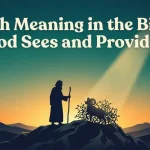
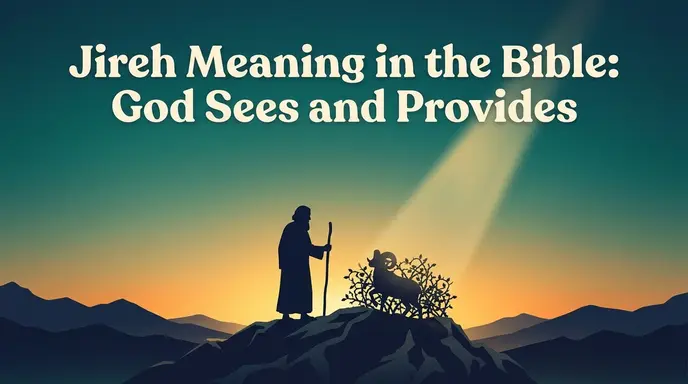
Abraham built the altar and bound his son. At the last moment, the angel of the LORD called from heaven and stopped him. Abraham looked up and saw a ram caught by its horns in a thicket, and he offered it in Isaac’s place (Genesis 22:13).
The word “saw” in that verse is the same Hebrew verb behind Jireh. Abraham saw the ram because God had already seen the need.
Naming the Place
Abraham named the place “The LORD Will Provide,” and the saying continued: “On the mount of the LORD it shall be provided” (Genesis 22:14). He did not invent a spiritual slogan. He named a location after something he had just watched God do.
Right after this, God confirmed His covenant promises to Abraham again (Genesis 22:17–18). GotQuestions.org also points out that centuries later, Solomon built the temple at that same location (2 Chronicles 3:1).
Follow the Word “See” Through Genesis 22
Here is a simple way to study this passage. Track how the Hebrew word for “see” moves through the chapter, as Ligonier’s article highlights:
- Verse 4: Abraham looks up and sees the place from far away.
- Verse 8: Abraham says God will see to the lamb Himself.
- Verse 13: Abraham looks up and sees the ram in the thicket.
- Verse 14: Abraham names the place “The LORD Will Provide.”
English Bibles translate this one verb in different ways (“saw,” “provide”), which is why the pattern is easy to miss. Once you spot it, Jireh stops being a vague idea and becomes a story you can follow line by line.
“Will Provide,” Not “Did Provide”
GotQuestions.org makes a helpful point: the name is not “The LORD did provide.” It is “The LORD will provide.” So the name does not only memorialize a past event. It also looks ahead to what God will do.
For you, that means Jireh is not just about remembering old help. It is an invitation to trust God’s faithfulness in what is still unknown.
How Christians Connect Jireh to Jesus
Many Christians read Genesis 22 as a picture that points forward to Christ, and both Ligonier and GotQuestions.org make this connection.
Abraham’s words, “God will provide the lamb,” echo John the Baptist’s later announcement that Jesus is the Lamb of God who takes away the sin of the world (John 1:29). Paul adds that God did not spare His own Son but gave Him up for us all (Romans 8:32).
In this reading, God saw humanity’s deepest need, which was forgiveness, and committed Himself to meet it.
Even so, the first and plain meaning of Genesis 22 is that God provided a ram in place of Isaac. The bigger picture builds on that story. It does not erase it.
Why Jireh Still Brings Comfort Today
Hard seasons often feel lonely because the problem seems invisible to everyone else. Jireh speaks directly to that feeling.
First, you are seen. The name starts with God seeing, not with you explaining.
Second, God is not caught off guard. Devotional writer Pat Elsberry notes that He is never surprised by our circumstances and never late. He moves at the moment He means to. That does not make waiting easy, but it means waiting is not wasted.
Third, God’s care is personal. The Bible does not present Him as distant from human struggles. In Genesis 22, He steps in at a specific moment for a specific need.
If you are in a season where the answer has not arrived, this name gives you something to hold: the One who sees you is also the One who acts.
What Jireh Does Not Mean
Because Jireh is so popular, it often gets stretched beyond what the Bible says. Here are five common mistakes:
- “God will give me everything I want.” No. In Genesis 22, provision followed God’s purpose, not Abraham’s wish list.
- “Jehovah Jireh is a separate god.” No. It is a name that describes the LORD, the God of Abraham, Isaac, and Jacob.
- “Provision always means money.” Not at all. It can be food, shelter, wisdom, strength, relationships, or spiritual encouragement.
- “If I have faith, I will never struggle.” Scripture shows many faithful people who suffered while still trusting God.
- “Trusting means doing nothing.” Jesus tells His followers not to be consumed by worry (Matthew 6:25–26), but that is not permission for laziness or careless planning.
A healthier way to hold the name: God is faithful and worth trusting, even when He does not answer the way you imagined.
How to Read Genesis 22 Without Misapplying It
A few simple habits keep you on solid ground:
- Start with the story, not your need. Ask what the passage shows about God before you ask what it gives you.
- Respect the context. This was a unique test in Abraham’s life. It is not a formula for demanding a specific outcome.
- Read it alongside the rest of Scripture. Matthew 6 and Philippians 4:19 speak of God’s care for real needs, but the Bible does not promise that every desire will be met.
- Stay open about the form. Abraham could not have planned a ram in a thicket. God’s help may arrive in a way you did not predict.
What God’s Provision Can Look Like
Genesis 22 shows provision as a ram. In daily life, it can look very different.
Practical Help
Pat Elsberry describes years as a single mother of two with a small income and no child support. She says help arrived as an unexpected check, a bag of groceries at her door, or an encouraging word. It was not always dramatic, she writes, but it was enough.
Strength, Wisdom, and People
Provision may come through a friend, a job opportunity, a new direction, or the strength to get through a hard season. If you only look for one kind of answer, you may miss the others.
God Himself
Elsberry also reminds readers that sometimes the greatest provision is not what we think we need, but God Himself, with the peace, strength, and hope that come from knowing Him. Psalm 23:1 and Psalm 34:10 both express this kind of confidence.
Ask yourself:
- Where have I already seen God’s help, even in small ways?
- What need am I holding too tightly right now?
- How could I help someone else this week?
Jireh Alongside Other Names of God
Jireh is one of several descriptive names for God in the Old Testament. They are not separate gods. Each highlights a different side of the same God:
- Jehovah Jireh: the LORD will provide (Genesis 22:14)
- Jehovah Rapha: the LORD who heals (Exodus 15:26)
- Jehovah Nissi: the LORD is my banner (Exodus 17:15)
- Jehovah Shalom: the LORD is peace (Judges 6:24)
- El Shaddai: traditionally translated God Almighty (Genesis 17:1)
5 Ways to Live Out Jireh This Week
Knowing the meaning is good. Living it out is better. Try these five steps:
- Read Genesis 22:1–14 in one sitting. Don’t jump straight to verse 14. Notice how Abraham’s words in verse 8 connect to the name he gives in verse 14.
- Say your need out loud in prayer. Be specific. Elsberry’s simple advice is to lay your need before Jesus, ask humbly, and watch for His help.
- Take the next responsible step. Abraham kept walking toward Moriah without knowing the ending. Pray, ask for advice, work, and plan, while trusting God with the outcome.
- Keep a short provision list. Write down ordinary blessings: a meal, a helpful friend, strength during a hard week. Gratitude trains your eyes to notice God’s care.
- Share what you have received. Paul connects God’s provision with generosity and good works (2 Corinthians 9:8). If God supplies, pass some of it on.
A Short Prayer Based on Jireh
You can pray something like this, in your own words:
“Lord, You see what I’m facing, even the parts I can’t explain. Thank You that You understand my need better than I do. Help me take the next faithful step, trust You with what I cannot control, and notice Your care along the way. Amen.”
Key Verses on God’s Provision
- Genesis 22:14: the verse that gives Jireh its name
- Matthew 6:25–26: God feeds the birds, and you are worth more to Him than they are
- Philippians 4:19: God supplies needs according to His riches in Christ Jesus
- Psalm 23:1: the LORD as shepherd, so “I shall not want”
- Psalm 34:10: those who trust the LORD lack no good thing
- Psalm 84:11: God withholds no good thing from those who do what is right
- 2 Corinthians 9:8: grace for every good work
- Romans 8:32: God gave His Son, so His people can trust His care
- James 1:17: every good gift comes from above
FAQs
What does Jireh mean in Hebrew?
Jireh comes from YHWH Yireh, built on the verb ra’ah, “to see.” In Genesis 22:14 it is translated “The LORD will provide,” because God sees a need, understands it, and commits Himself to meet it.
Is Jireh a name of God?
Yes, as part of Jehovah Jireh, a name that describes the LORD as provider. It is not a separate god. It refers to the same God of Abraham, Isaac, and Jacob, revealed through the Genesis 22 story.
Where is Jireh mentioned in the Bible?
The combined name Jehovah Jireh appears in only one verse, Genesis 22:14. Abraham gave it to the place where God provided a ram in place of Isaac. Other passages teach the theme of provision without using the name.
Does Jehovah Jireh mean God will make me rich?
No. The name means the LORD will provide, not that He guarantees wealth or every wish. Provision can include food, wisdom, strength, people, and peace. Genesis 22 shows God meeting a real need according to His purpose.
Why is it “will provide” and not “provided”?
Because the name looks ahead as well as back. Abraham named the place after the ram, yet the words say the LORD will provide. It points to God’s continuing faithfulness, not only one past event.
How does Jireh connect to Jesus?
Many Christians see the ram given in Isaac’s place as a picture of God giving His Son. Abraham’s words about the lamb are linked with John 1:29 and Romans 8:32, though Genesis 22’s first meaning is the ram.
Conclusion:
The Jireh meaning in the Bible is simple to say and deep to live: the LORD sees, understands, and commits Himself to act. Genesis 22:14 gives the name its roots, and Abraham’s ram gives it its meaning.
It does not promise a life without struggle or a wish list fulfilled. It promises something steadier: a God who knows your need and does not look away.
For Christians, that same faithfulness shines most clearly in Jesus.
Your next step is small. Open Genesis 22 today, read verses 1–14, and write down one need you are trusting God with.

I am Rebecca Collins, a Christian writer and Bible researcher at BibleMeaningHub.com. I share insightful biblical interpretations and faith-based teachings to help readers better understand Scripture. My mission is to encourage spiritual growth and strengthen faith through God’s Word.