Picture a group of tired travelers walking a long road home. Their city lies in ruins. Their temple is broken stone. But one man walks at the front, carrying a scroll close to his heart. His name is Ezra.
Maybe you heard this name at church. Maybe a friend named their child Ezra, and you wondered what it means. Or maybe you simply feel drawn to this quiet, powerful figure tucked inside the Old Testament.
The name Ezra carries a meaning that speaks straight to the heart: help. It comes from the Hebrew word ezer, meaning “help” or “helper.” But this is not a small kind of help. It is the kind that rebuilds broken cities. The kind that restores broken faith.
So what does Ezra’s meaning in the Bible really teach us? It is more than a name. It is a picture of what God does when His people feel lost, scattered, and far from home. Let’s walk through the story together, and see what it says to your own heart today.
Biblical Meaning of Ezra in the Bible
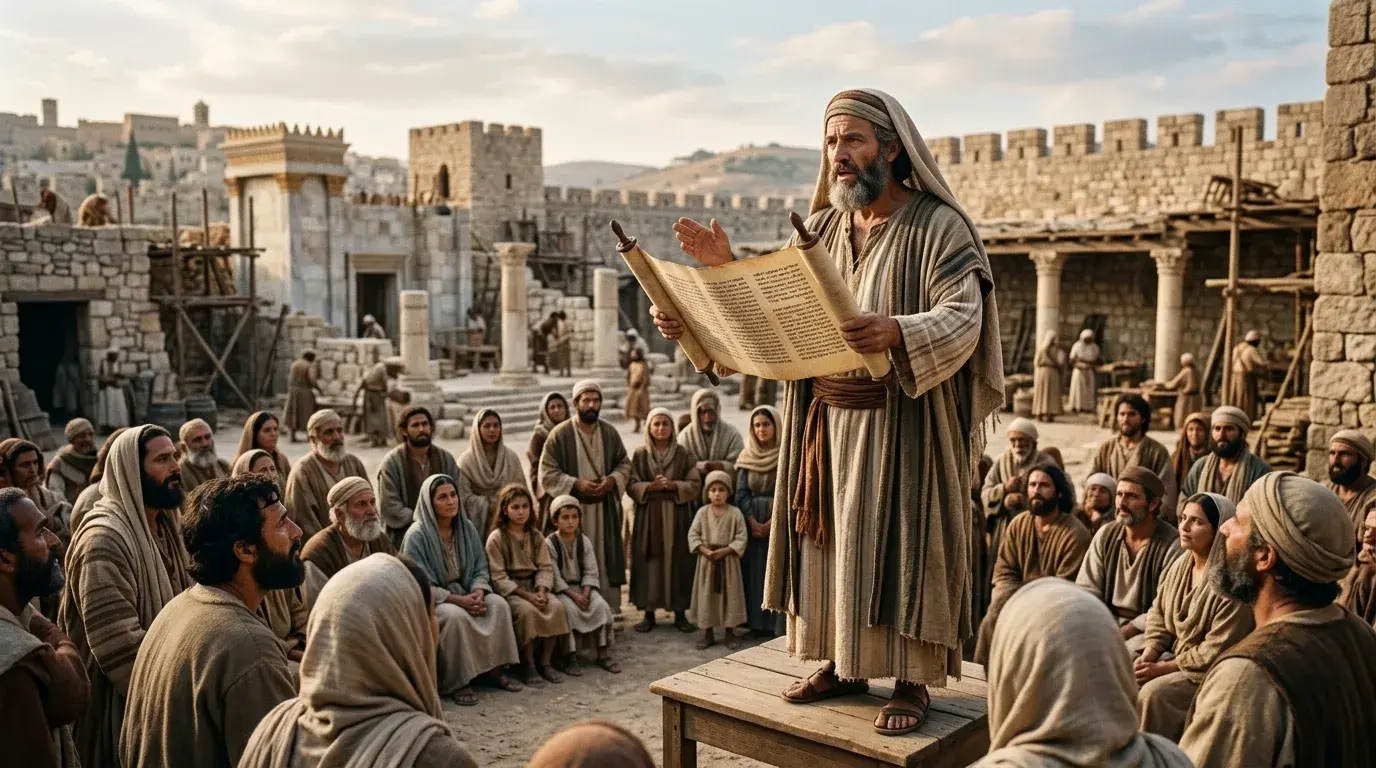
Ezra appears in Scripture as a priest and scribe, a man devoted to studying and teaching God’s Law (Ezra 7:6). He lived during a hard season for God’s people. The Israelites had spent years in exile in Babylon, far from Jerusalem, far from the temple, far from everything familiar.
Then something changed. King Cyrus of Persia allowed the exiles to return home. Ezra led one of these groups back to Jerusalem, carrying not gold or weapons, but God’s Word. Ezra 7:10 says it plainly: “For Ezra had determined in his heart to study the Law of the Lord, obey it, and teach its statutes and ordinances in Israel.”
This is where the meaning of his name comes alive. Ezra was not just called “help” by accident.
There is comfort here, and also a gentle warning. The people had drifted from God’s ways during their years away. Ezra wept over this (Ezra 9:3-5). He did not shame the people. He grieved with them, then led them back to repentance and renewal. His story shows both sides of faith: the pain of straying, and the hope of returning.
This is where Ezra’s meaning in the Bible becomes personal. Maybe you feel like those exiles. Tired. Far from where you started. Wondering if home is even possible anymore. Ezra’s story whispers a quiet promise: God sends help. Sometimes that help looks like a person. Sometimes it looks like His Word landing on your heart at just the right moment. Either way, you are not meant to rebuild alone.
The name Ezra also connects to a larger biblical pattern. Throughout Scripture, God is called our helper again and again. Psalm 121:2 says, “My help comes from the Lord, the Maker of heaven and earth.” When you see the name Ezra, you are seeing a small reflection of a much bigger truth: God never leaves His people to rebuild alone.
Spiritual Significance and Symbolism
Ezra’s story is not only history. It carries a spiritual pattern many believers still walk through today. Think of a season in your life when everything felt like rubble. A relationship. A dream. A piece of your faith. Ezra shows us that restoration is possible, even after deep loss.
His life also points to the power of God’s Word in rebuilding a life. Ezra did not carry weapons back to Jerusalem. He carried Scripture. This teaches a quiet lesson: sometimes the strongest tool for rebuilding your heart is simply opening the Bible and letting it speak.
Think of someone today, sitting with coffee, reading a few verses before work. That small habit is Ezra’s legacy still working. Small, faithful moments of returning to God’s Word slowly rebuild what feels broken.
Ezra’s tears over his people’s failures also model something beautiful: conviction without cruelty. He grieved sin, but led with compassion, not condemnation. This is a gentle reminder for our own Christian growth. Growth rarely comes from shame. It comes from honest sorrow met by grace.
Biblical Interpretations in Dreams or Real Life
Some people search for Ezra’s meaning in the Bible after hearing the name in a sermon, a dream, or while naming a child. If the name Ezra comes to mind during prayer or reflection, it often points toward a season of rebuilding.
If this thought feels peaceful and hopeful, it likely points to renewal. God is near, ready to help you rebuild gently, piece by piece.
If it feels heavy or overwhelming, remember Ezra’s own tears. Grief over what is broken is not weakness. It is often the first honest step toward healing.
Practical Lessons & Faith Insights
Let Ezra’s story remind you that help is already on the way. Open God’s Word the way Ezra did, with a determined heart. Grieve what needs grieving, then trust God’s timing to rebuild what feels broken. You are not meant to carry the rubble alone.
Conclusion:
Ezra’s meaning in the Bible, “help,” reflects a God who never abandons His people in ruins.
His story reminds us that restoration is possible, faith can be rebuilt, and God’s Word is often the first stone laid.
Whatever feels broken in your life today, may you trust that your help, too, comes from the Lord.

I am a Christian writer and Bible researcher passionate about making Scripture easy to understand. Through biblical meanings, Hebrew insights, and faith-based studies, I help readers grow in their knowledge of God’s Word and strengthen their walk with Christ.