You’re reading the Bible when you come across the word iniquity. It sounds serious, and you may wonder, Is it the same as sin, or does it mean something different?
This word appears throughout Scripture and carries an important message about the human heart, God’s justice, and His mercy.
Understanding the meaning of iniquity in the Bible can help you better understand God’s Word and His plan for forgiveness.
In this article, you’ll discover what iniquity means in the Bible, how it differs from sin, and the spiritual lessons it teaches for your faith today.
Biblical Meaning of Iniquity in the Bible
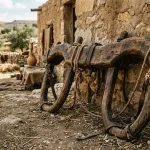
In the Bible, iniquity refers to a deep, twisted state of the heart. It is different from a single mistake. The Hebrew word often translated “iniquity” is avon, which carries the idea of something bent, crooked, or turned out of shape. Picture a tree that grows crooked from the root. That crookedness is not one bad branch. It runs through the whole trunk.
This helps explain why the Bible often separates iniquity from other words like sin and transgression. Sin is missing the mark, like an arrow that falls short of the target. Transgression is stepping over a clear line on purpose. Iniquity goes deeper still. It points to the inward twist that leads to both sin and transgression in the first place.
Scripture speaks about iniquity with honesty, but never without hope. In Psalm 51:2, David prays, “Wash away my iniquity and cleanse me from my sin.” He does not hide from the word. He brings it straight to God, trusting that God can reach the deepest, most crooked places of the heart.
Isaiah 53:5 points forward to something greater. It says the coming Savior would be “pierced for our transgressions, crushed for our iniquities.” This verse carries the heart of the gospel. It shows that iniquity, as heavy as it sounds, was never meant to be the final word. It was meant to be carried, healed, and forgiven.
There is a warning side too. Iniquity, left alone, grows heavier. Genesis 15:16 speaks of the “iniquity of the Amorites” not yet being complete, showing that unchecked wrongdoing can build over time and lead to real consequences. The Bible does not soften this truth. But even here, the warning exists because God cares about restoration, not condemnation for its own sake.
This is where the emotional heart of the word lives. Iniquity names something real and serious, but every time it appears, it stands beside God’s willingness to forgive, cleanse, and restore. Micah 7:19 says God will “tread our iniquities underfoot” and cast them into the depths of the sea. That is not a picture of shame. That is a picture of mercy that goes all the way down.
Spiritual Significance and Symbolism
Iniquity, at its core, points to the human need for a Savior. It reminds us that good behavior alone cannot straighten a crooked heart. Only God can do that kind of deep work.
This connects powerfully to your own faith journey. Maybe you have tried to fix a pattern in your life through willpower alone, only to find it returning again and again. That frustration is not failure. It is often the moment God uses to show that real change comes from Him, not from self-effort.
Think of a plant with roots grown sideways underground. Trimming the leaves will not fix it. The roots need to be reset. In the same way, God does not just want to change your actions. He wants to reach the root, the place iniquity lives, and make it new.
This is where transformation becomes personal. Reading about iniquity is not meant to leave you feeling condemned. It is meant to lead you toward humble prayer, honest confession, and the quiet relief of being fully known and still fully loved.
Biblical Interpretations in Dreams or Real Life
Some readers come across this topic after a season of conviction, a hard conversation, or even a dream that left them uneasy about something in their heart. These moments are not random.
If a season of life feels heavy with guilt or a sense of hidden wrongdoing, it often points to an invitation, not an accusation. God may be gently drawing you toward honest confession and deeper freedom.
A peaceful, reflective moment of realizing a pattern in your life often signals spiritual awakening. It is God’s Spirit bringing something into the light so it can finally be healed.
A fearful or stormy feeling may reflect inner struggle or resistance to change. This is not a reason to run from God. Bring it to prayer instead. His presence, not distance, is always the safest place to bring a troubled heart.
Practical Lessons & Faith Insights
Do not fear the word iniquity. Let it lead you to honest prayer. Confess what feels crooked. Trust God’s timing to make it straight. Healing rarely happens all at once, but it always starts with honesty before God.
Conclusion:
Iniquity in the Bible names something real, but it never stands alone. Beside every mention sits God’s mercy, patient and ready.
Wherever your heart feels bent or heavy today, bring it to Him.
He is faithful to straighten what feels crooked and to make all things new.
Read More Post:
Josiah Meaning in the Bible: A Name of Healing and Hope
Steward Meaning in Bible: A Guide to Faithful Living
William Meaning in the Bible: Biblical Meaning and Spiritual Significance

I am a Christian writer and Bible researcher passionate about making Scripture easy to understand. Through biblical meanings, Hebrew insights, and faith-based studies, I help readers grow in their knowledge of God’s Word and strengthen their walk with Christ.