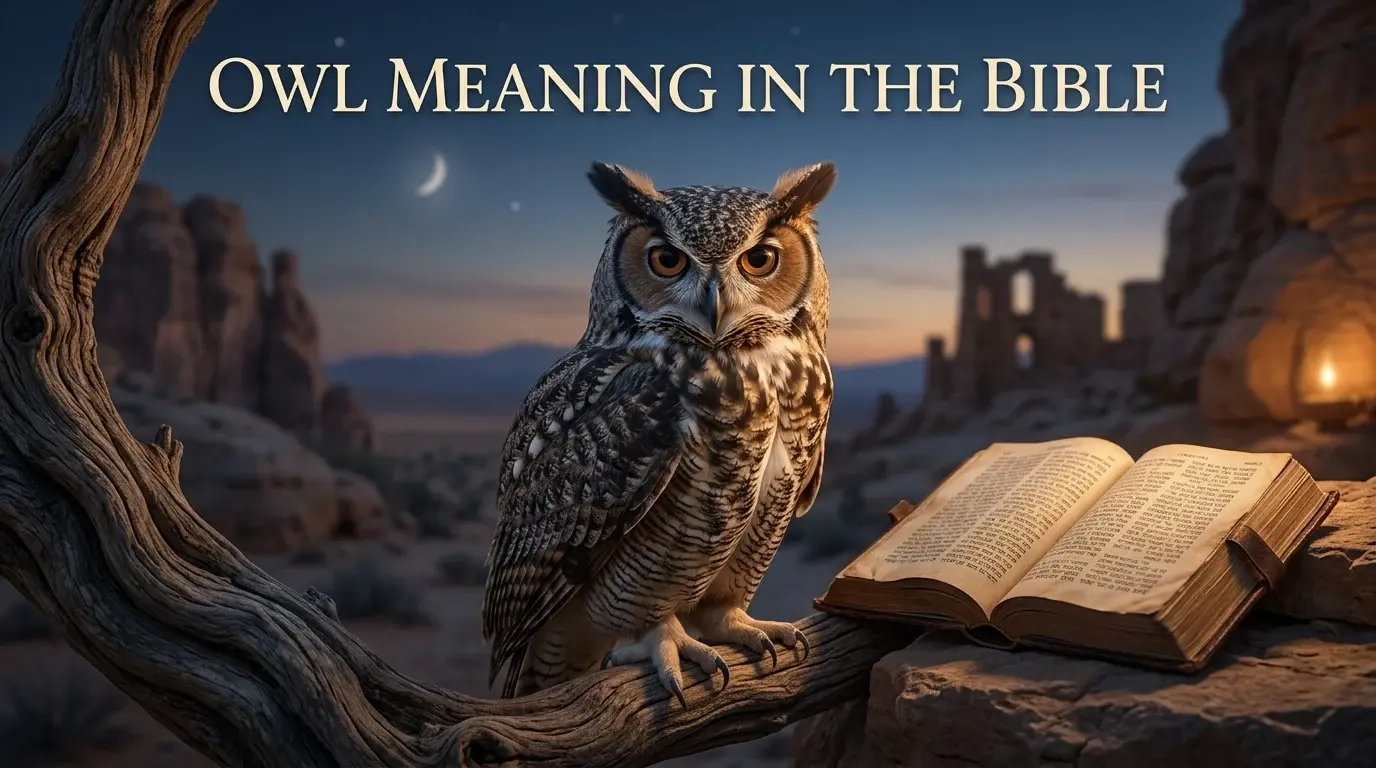
Have you ever seen an owl at night and wondered if it has a biblical meaning? Many Christians ask this question because owls are mysterious birds that often appear in the Bible.
The Bible uses animals and birds to teach important spiritual lessons, and the owl is one of them. In Scripture, it is often connected with loneliness, desolation, and God’s judgment. At the same time, its presence reminds us that God rules over all creation.
In this article, we’ll explore the owl meaning in the Bible, the verses where owls are mentioned, and the spiritual lessons believers can learn from them.
🦉 Quick Answer: What Does Owl Meaning in the Bible Represent?
In the Bible, the owl is primarily a symbol of desolation, mourning, and spiritual darkness. It appears in passages describing judgment, ruined lands, and loneliness. In Hebrew, several words are translated as “owl,” pointing to a creature of the night associated with wilderness and isolation. It is not a symbol of wisdom in Scripture as it is in secular culture.
📖 Biblical Meaning of the Owl — Hebrew Word Study
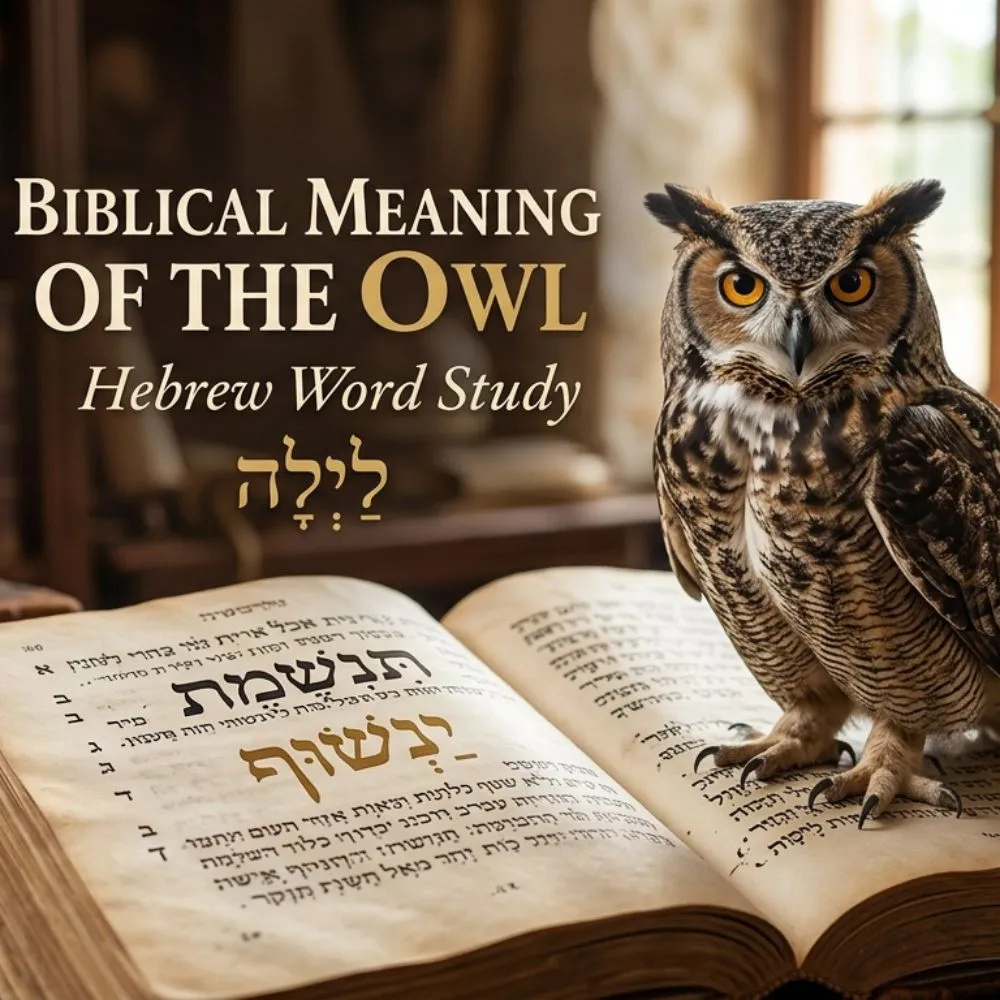
To truly understand the owl meaning in the Bible, we need to go back to the original Hebrew text. Unlike modern culture, which often sees the owl as a symbol of wisdom, the Hebrew Scriptures present a very different picture.
Several Hebrew words are translated as “owl” in the Old Testament:
1. Yanshuf (יַנְשׁוּף) — This word appears in Leviticus 11:17 and Deuteronomy 14:16. Most scholars believe it refers to a type of owl. The root meaning is connected to twilight or dusk, pointing to a creature of darkness.
2. Qippoz or Qippod — Found in Isaiah 34:15, this word is sometimes translated as “great owl” or “arrow snake” depending on the translation. It describes a creature making its home in ruined places.
3. Bath Ha’ya’anah (בַּת הַיַּעֲנָה) — Literally meaning “daughter of the desert” or “daughter of greediness,” this term appears in passages about desolate lands and lament.
4. Kos (כּוֹס) — Found in Psalm 102:6, this is often translated as “owl” or “little owl.” It describes a creature of loneliness and sorrow.
The literal meaning of these words connects to darkness, wilderness, and mourning. The spiritual meaning, therefore, is deeply tied to the themes of God’s judgment, spiritual emptiness, and the fate of those who turn away from Him.
📜 Biblical Verses About the Owl and Their Lessons
Verse 1 — Leviticus 11:17
The little owl, the cormorant, the great owl…
Explanation: In this passage, God gives Moses a list of birds that the Israelites were not permitted to eat. Owls appear on this list of “unclean” birds. This does not mean owls are evil, but it shows that God set them apart as creatures belonging to the wild and the night.
Practical Lesson: God’s instructions always have purpose. Even the dietary laws remind us that He is holy and calls His people to be set apart from the patterns of the world.
Verse 2 — Deuteronomy 14:16
The little owl, the great owl, the white owl…
Explanation: This verse repeats the classification of owls as unclean birds, reinforcing the theme from Leviticus. It appears in the context of God’s covenant with Israel and His desire to distinguish His people from surrounding nations.
Practical Lesson: God’s boundaries are acts of love. He separates us not to restrict us, but to protect and consecrate us for His purposes.
Verse 3 — Psalm 102:6
I am like a desert owl, like an owl among the ruins.
Explanation: The psalmist uses the image of a lonely owl in a desolate place to express deep personal sorrow. This is one of the most emotionally powerful uses of the owl in Scripture. The writer feels abandoned, forgotten, and broken — like a bird crying alone in the dark.
Practical Lesson: God understands your pain. Even when you feel like that owl — isolated and weeping in the ruins — He sees you. This verse is a reminder that it is okay to bring your grief honestly before God.
Verse 4 — Isaiah 34:11
The desert owl and screech owl will possess it; the great owl and the raven will nest there…
Explanation: Isaiah prophesies against the nation of Edom, declaring that its land will become a desolate wasteland. Owls and ravens taking over the land is a picture of complete ruin — a place once full of life now abandoned and dark.
Practical Lesson: Pride and rebellion against God always lead to emptiness. What we build in our own strength, without Him, will eventually become ruins. Our lives thrive only when built on His foundation.
Verse 5 — Isaiah 34:15
The owl will nest there and lay eggs, she will hatch them, and care for her young under the shadow of her wings…
Explanation: Even in a prophecy of judgment, there is a subtle picture of God’s created order continuing. The owl is a creature God made, and even in desolate places, life goes on under His watchful design.
Practical Lesson: God is sovereign even in places of judgment and ruin. His purposes are never derailed. He sees every nest, every creature — and He certainly sees every detail of your life.
Verse 6 — Micah 1:8
Because of this I will weep and wail; I will go about barefoot and naked. I will howl like a jackal and moan like an owl.
Explanation: The prophet Micah mourns over the coming judgment of Israel. He compares his cries of grief to the mournful cry of an owl. This connects the owl to lamentation and deep sorrow over sin and its consequences.
Practical Lesson: True spiritual sensitivity means grieving over sin — our own and the brokenness in the world around us. Micah’s mourning reflects a heart that takes God’s word seriously.
Verse 7 — Job 30:29
I have become a brother of jackals, a companion of owls.
Explanation: Job, in the depths of his suffering, describes himself as an outcast — as lonely as a creature of the night. The owl here represents isolation, rejection, and the feeling of being utterly alone.
Practical Lesson: God is near to the brokenhearted (Psalm 34:18). Even in your most isolated moment, you are never truly alone. Job’s story teaches us that God restores those who remain faithful through suffering.
🏛️ Historical and Biblical Context of the Owl
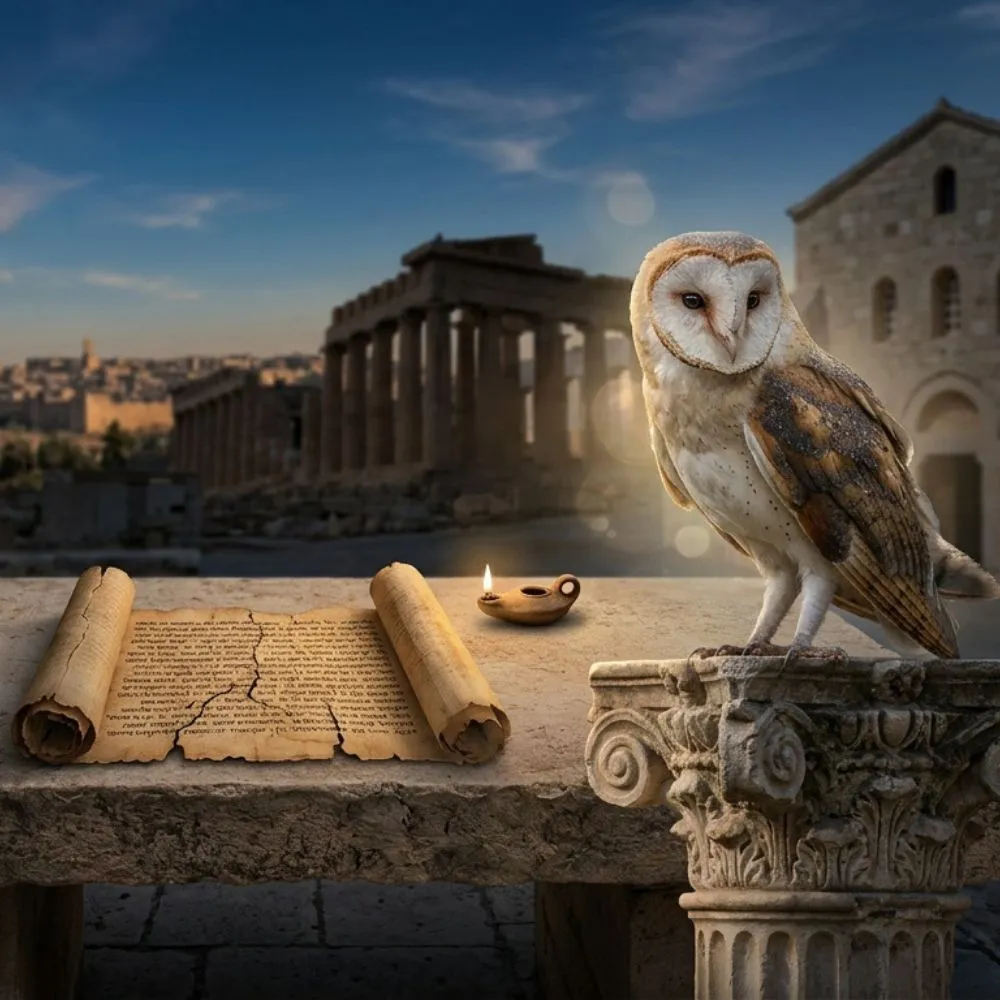
In the ancient Near East, owls were seen quite differently depending on the culture. In Greek mythology, the owl was linked to Athena, the goddess of wisdom — which is why secular culture often sees the owl as a symbol of knowledge and intelligence. However, the Bible does not adopt this view.
In the Old Testament world, owls were creatures of the night and the wilderness. They were associated with places people avoided — deserts, ruins, and desolate cities. Their haunting calls in the dark made them symbols of loneliness and abandonment.
Jewish culture understood owls as unclean birds — not to be eaten, not to be admired as holy symbols. Their presence in a place was a sign that something had gone terribly wrong. When prophets described a once-great city overrun by owls, their audience understood immediately: this place is finished. God’s blessing has lifted.
In the New Testament, owls are not directly mentioned. However, the themes connected to owls — darkness, isolation, spiritual desolation — are addressed throughout the Gospels and Epistles. Jesus is the Light of the World (John 8:12), who comes to scatter the darkness where owls dwell.
❓ Is the Owl Mentioned in the Bible? What Does It Teach Believers?
Yes, the owl is mentioned multiple times in the Bible, primarily in the Old Testament. It appears in the books of Leviticus, Deuteronomy, Psalms, Isaiah, Micah, and Job.
The owl is important in Scripture for several reasons:
- It marks desolation — its presence signals God’s judgment on proud, rebellious places.
- It expresses sorrow — the psalmist and prophets used the owl’s lonely cry to describe grief over sin.
- It reminds us of God’s holiness — its classification as unclean pointed Israel toward purity and separation.
For believers today, the owl teaches us that sin and pride lead to spiritual emptiness. A life without God becomes like a ruined city — dark, hollow, and haunted. But God’s grace can restore even the most desolate places.
✨ Spiritual Meaning and Symbolism of the Owl in Scripture
The spiritual meaning of the owl in the Bible is layered and rich. Here are the key themes:
Desolation and Judgment: Owls nesting in ruined places symbolize what happens when a nation, a community, or a person abandons God. Pride goes before destruction (Proverbs 16:18), and the ruins that follow are silent witnesses to that truth.
Loneliness and Mourning: The owl’s solitary cry in the night mirrors the ache of a soul far from God. This is not hopeless, though. God meets us in our loneliness and calls us back to relationship with Him.
Darkness vs. Light: The owl thrives in darkness, but Jesus said, “I am the light of the world. Whoever follows me will never walk in darkness, but will have the light of life” (John 8:12). The owl reminds believers how precious the light truly is.
Worldliness vs. Godliness: The places where owls dwell in Scripture are places where God’s blessing has departed — cities built on human pride and sin. This challenges believers to build their lives on eternal values rather than temporary ones.
God’s Sovereignty: Even the owl — a creature of ruins and darkness — is under God’s careful watch. He created it, sustains it, and uses even desolate places to speak His truth.
🌙 Owl Meaning in Dreams and Real-Life Experiences

Many Christians wonder what it means if they see an owl in a dream or in an unexpected real-life encounter. While the Bible does not give a specific dream-interpretation guide for owls, we can draw thoughtful, faith-grounded principles from Scripture.
If you dream of an owl in a peaceful setting, it may simply reflect a season of quiet reflection in your spiritual life — an invitation from God to slow down and listen in the stillness of the night.
If the owl in your dream feels unsettling or appears in a dark, ruined place, it could be the Holy Spirit prompting you to examine areas of your life where pride or sin may be taking root. Ask God in prayer: Is there something I need to surrender? Is there a place in my heart that needs Your restoration?
A lone owl calling out in a dream might mirror the cry of Psalm 102 — perhaps you are in a lonely or painful season. God hears that cry. He is not distant.
Always ground any interpretation in Scripture and prayer. Do not lean on superstition or folklore. Test every impression against God’s Word, and seek wise counsel from trusted brothers and sisters in Christ. God speaks clearly through His Word, and the Holy Spirit guides those who seek Him earnestly.
🙏 Life Lessons for Christians From the Owl in the Bible
The owl meaning in the Bible carries several practical lessons every believer can apply today:
1. Avoid Pride and Ego The cities that became ruins in Isaiah were not destroyed by accident — they fell because of arrogance and rebellion. Guard your heart against pride. Walk humbly before God (Micah 6:8).
2. Focus on Eternal Values The ruined places where owls dwell once seemed powerful and permanent. They were not. Store up treasures in heaven, not on earth (Matthew 6:20).
3. Bring Your Sorrow to God Like the psalmist in Psalm 102, do not pretend you are fine when you are hurting. God invites your honest grief. He is close to the brokenhearted.
4. Walk in the Light The owl belongs to darkness. You are called to be a child of light (Ephesians 5:8). Let the Word of God illuminate every corner of your life.
5. Trust God’s Sovereign Plan Even in places of ruin, God is still at work. He can restore what seems irretrievably broken. Trust His plan, even when you cannot see the whole picture.
6. Strengthen Your Prayer Life The lonely cry of the owl reminds us to keep calling out to God. Prayer is your lifeline. Stay in constant conversation with your Heavenly Father.
❔ FAQs
What does owl mean in Hebrew?
In Hebrew, several words translate as “owl,” including kos and yanshuf, all pointing to a bird of darkness and lonely, desolate places.
Is seeing an owl a bad omen in the Bible?
No. The Bible does not teach omens. Owls symbolize desolation in Scripture, but God alone directs our paths through His Word and Spirit.
What is the spiritual meaning of an owl in the Bible?
Spiritually, the owl represents desolation, mourning, and the consequences of turning away from God’s light and presence.
Why does the Bible associate owls with ruined places?
Owls lived in deserts and ruins in the ancient world. Prophets used them as vivid images of what judgment and abandonment by God look like.
How can Christians respond to seeing an owl?
Simply appreciate God’s creation. If it prompts spiritual reflection, bring any convictions or questions to God in prayer and Scripture study.
🌟 Conclusion:
The owl meaning in the Bible reminds us that life without God leads to darkness, loneliness, and spiritual emptiness. At the same time, it points to God’s mercy and His power to restore what is broken.
If you are going through a difficult season, remember that God has not forgotten you. He brings hope to the hopeless, peace to the troubled, and new life to those who trust Him.
Let the owl remind you to stay close to God, walk in His light, and trust His plan. No matter how dark life may seem, God’s love and restoration are always greater.
“The Lord your God is with you, the Mighty Warrior who saves.” — Zephaniah 3:17
Read More Post:
What Does 444 Biblically Mean? Truth Every Christian Should Know
Michael Meaning in Christianity: Biblical & Spiritual Meaning

I am a Christian writer and Bible researcher passionate about making Scripture easy to understand. Through biblical meanings, Hebrew insights, and faith-based studies, I help readers grow in their knowledge of God’s Word and strengthen their walk with Christ.