Have you ever walked into a room and instantly known something was wrong with someone just by looking at their face? Maybe their shoulders dropped, their eyes lost their light, or their expression turned cold. The Bible has a beautiful, old-fashioned word for this: countenance.
Many believers come across this word while reading the King James Version and pause, wondering what it really means. That’s exactly why so many people search for the countenance definition Bible writers used thousands of years ago. It’s not just an old English term for “face.” It carries weight, emotion, and even spiritual meaning.
Understanding this word opens up a deeper layer of Scripture. It helps us see how God relates to us, how our inner life shows on the outside, and why our expression matters more than we might think. Let’s explore this together.
🔍 Quick Answer: What Does Countenance Mean in the Bible?
In the Bible, countenance refers to a person’s face or facial expression, often reflecting their inner emotional or spiritual state. It can describe sadness, joy, favor, or even God’s presence shining toward someone. The countenance definition Bible writers intended goes beyond appearance; it reveals the heart and one’s standing before God.
📖 Biblical Meaning of Countenance
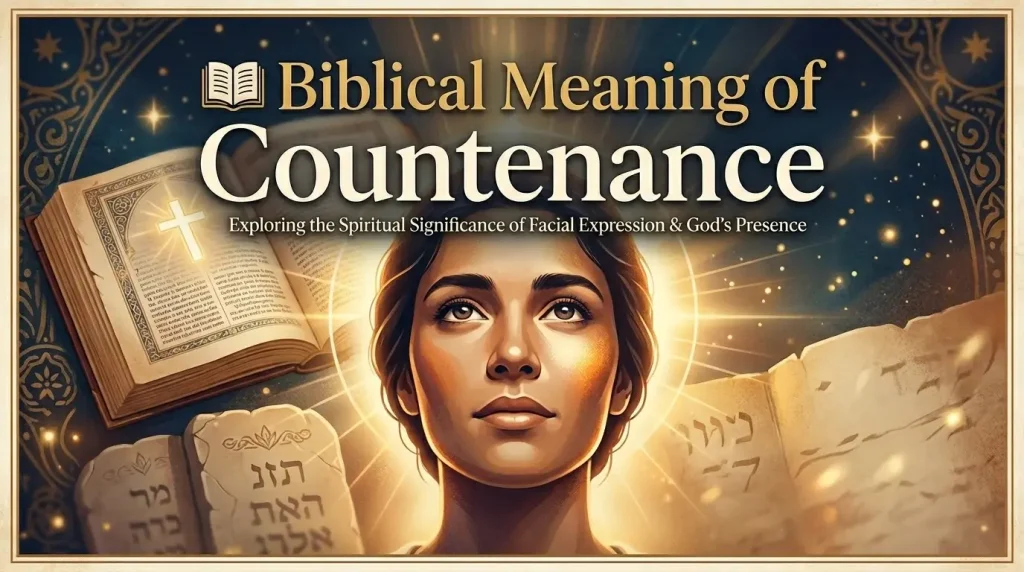
To truly grasp the countenance definition Bible translators chose, it helps to look at the original languages behind the English word.
Hebrew Meaning
The most common Hebrew word translated as “countenance” is paniym (פָּנִים), which literally means “face” or “presence.” Interestingly, this word is always plural in Hebrew, almost as if a single face holds many expressions at once.
Paniym comes from the root panah, meaning “to turn” or “to face toward.” So when Scripture speaks of someone’s countenance, it’s describing the direction their face is turned, and by extension, the state of their heart.
Literal Meaning
Literally, countenance simply means the face, the visible front of a person, including their expression and demeanor. It’s how someone looks outwardly in a given moment.
Spiritual Meaning
Spiritually, the countenance becomes a window into the soul. A troubled countenance often signals inner conflict, guilt, or sorrow. A bright or shining countenance can reflect peace, favor, or closeness with God.
Biblical Significance
This idea matters because the Bible consistently links outward appearance to inward reality. Numbers 6:25 even uses the word to describe God’s own face turning toward His people in blessing, showing how personal and relational this concept truly is.
🏛️ Historical & Biblical Context
In ancient Israelite culture, the face carried enormous social and spiritual weight. Seeing someone “face to face” implied intimacy, honesty, and relationship.
Old Testament Usage
Throughout the Old Testament, countenance appears in moments of deep emotion. Cain’s countenance fell after God rejected his offering (Genesis 4:5). Daniel and his friends had countenances that appeared healthier than others after honoring God with their diet (Daniel 1:15).
New Testament Relevance
The New Testament continues this theme, especially at the Transfiguration, where Jesus’s countenance shone like the sun (Matthew 17:2). This moment reveals divine glory breaking through human form.
Cultural Understanding in Biblical Times
In biblical culture, a king’s countenance reflected his mood toward his subjects. A favorable countenance meant safety; an angry one meant danger. This is why the priestly blessing in Numbers asks God to lift His countenance toward His people, it’s a request for divine favor, not just a poetic phrase.
❓ Is Countenance Mentioned in the Bible?
Yes, the word appears dozens of times across both Testaments, especially in the King James Version.
Where It Appears in Scripture
You’ll find it in Genesis, Numbers, 1 Samuel, Psalms, Proverbs, Daniel, Matthew, Luke, and 2 Corinthians, among other books. It spans poetry, narrative, prophecy, and Gospel accounts.
Why It Is Important
Its frequent appearance shows how central facial expression and divine presence were to biblical writers. The countenance definition Bible authors relied on connects emotional honesty with spiritual reality.
What It Teaches Believers
It teaches us that God notices our hearts, sees behind our expressions, and desires to lift His own face toward us in blessing rather than judgment.
✨ Spiritual Meaning & Symbolism
The concept of countenance carries rich spiritual symbolism throughout Scripture.
Pride vs Humility
A proud countenance is often condemned in Scripture (Proverbs 21:4), while a humble, contrite heart is praised. How we carry our face can reflect arrogance or genuine humility before God.
Worldliness vs Godliness
A countenance fixed on worldly approval seeks outward validation. A godly countenance reflects inner peace rooted in faith, not circumstances or applause.
Spiritual Emptiness
A downcast countenance can also signal spiritual emptiness, a soul searching for meaning apart from God, much like David described in his psalms of lament.
God’s Perspective on Countenance
God looks past our outward face to our heart (1 Samuel 16:7). Yet He also delights in lifting His own countenance toward us, offering comfort, favor, and presence.
Lessons for Believers Today
This reminds us that our true identity isn’t found in how we appear to others, but in how God sees and responds to us with grace.
📜 Biblical Verses About Countenance
Here are key verses that reveal the depth of this word throughout Scripture.
Genesis 4:5
After God rejected Cain’s offering, “his countenance fell.” This shows how disappointment and resentment visibly altered his face, foreshadowing the bitterness that led to tragedy. It’s a sobering reminder that unresolved anger often shows before it explodes into action. The lesson here is simple: when our countenance falls, it’s a signal to deal with our heart before our emotions take control.
Numbers 6:25-26
This is the famous priestly blessing: “The LORD make his face shine upon thee… and give thee peace.” Here, God’s countenance represents His favor and presence resting on His people. It’s one of the clearest pictures of grace in the Old Testament. The practical lesson is that we can always seek God’s favor through prayer, trusting that He desires to bless, not condemn, those who seek Him.
1 Samuel 16:7
God tells Samuel not to judge by outward appearance, including countenance, because “the LORD looketh on the heart.” This verse reshapes how we evaluate ourselves and others. It teaches that spiritual depth matters far more than outward impressions, encouraging believers to focus on character over charisma.
Psalm 21:6
David writes that God made him “exceeding glad” with His countenance, linking divine presence directly to joy. This shows that true happiness flows from closeness with God, not circumstances. The lesson is that seeking God’s presence brings a joy nothing else can replicate.
Proverbs 15:13
“A merry heart maketh a cheerful countenance: but by sorrow of the heart the spirit is broken.” This proverb confirms the heart-face connection found throughout Scripture. It teaches that inner contentment naturally overflows into our expression, encouraging believers to nurture joy from within rather than forcing a smile outwardly.
Proverbs 16:15 “
In the light of the king’s countenance is life.” This highlights how a leader’s favor brings security and flourishing to those under their care. Spiritually, it points us to God as King, whose favor brings true life to His people.
Daniel 1:15
Daniel and his companions’ countenances appeared healthier than others after choosing obedience over compromise. This shows that faithfulness to God can visibly bless our lives, even in small daily choices. The lesson is that integrity, even in private decisions, often produces noticeable fruit.
Matthew 17:2
At the Transfiguration, Jesus’s countenance “did shine as the sun.” This reveals His divine glory breaking through, reminding believers that Christ is far greater than His earthly appearance suggested. It encourages us to look beyond the ordinary and recognize the extraordinary presence of God among us.
2 Corinthians 3:18
Though it uses “face” rather than countenance directly in most translations, this verse teaches that believers reflect God’s glory more and more as they behold Him. The practical lesson is that spending time with God transforms our inner and outer life over time.
🌱 Life Lessons for Christians
Understanding the countenance definition Bible teaches us practical ways to grow in faith.
Avoid Pride and Ego
A lifted-up countenance rooted in pride leads to a fall. Choose humility instead, allowing your expression to reflect genuine reliance on God rather than self-importance.
Focus on Eternal Values
Don’t chase outward appearances or approval. Anchor your identity in eternal truth rather than fleeting impressions.
Strengthen Prayer Life
Like the priestly blessing, ask God to make His face shine upon you. Prayer invites His presence into your daily countenance.
Walk in Humility
Let your expression reflect a contrite, teachable heart rather than arrogance or self-righteousness.
Trust God’s Plan
Even when your countenance falls due to disappointment, trust that God sees your heart and is working behind the scenes for your good.
⚠️ Common Misunderstandings
The word countenance is often misunderstood today, especially outside Christian circles.
Modern Misuse
Some assume countenance simply means “physical attractiveness,” reducing it to appearance alone rather than spiritual or emotional depth.
Cultural Confusion
Because the word feels old-fashioned, many readers skip over it without realizing its rich theological meaning.
Wrong Interpretations Online
Some online sources oversimplify countenance as just “face,” missing the emotional and spiritual layers Scripture intends.
Correct Biblical Explanation
The accurate countenance definition Bible scholars affirm includes facial expression, emotional state, and spiritual condition, all woven together as one meaningful whole.
💬 FAQs
What does countenance mean in Hebrew?
The Hebrew word is paniym, meaning “face” or “presence.” It’s plural in form, suggesting a face full of expression and meaning. This word appears throughout the Old Testament to describe both human and divine faces, often symbolizing presence, favor, or emotional state.
Is countenance the same as appearance?
Not exactly. Appearance often refers to physical looks, while countenance includes facial expression and emotional or spiritual condition. The Bible uses countenance to reveal what’s happening inside a person, not just how they look on the outside.
What does a “fallen countenance” mean in the Bible?
A fallen countenance describes sadness, anger, or disappointment showing visibly on someone’s face, as seen with Cain in Genesis 4:5. It signals an inner emotional shift that often precedes important decisions or actions.
Why does God’s countenance matter in Scripture?
God’s countenance represents His presence, favor, and attention toward His people. When Scripture asks God to “lift up His countenance,” it’s a request for blessing, protection, and closeness with Him.
Can countenance reveal someone’s spiritual state?
Yes. Throughout the Bible, a person’s countenance often reflects their inner spiritual condition, whether they’re walking in obedience, struggling with sin, or experiencing God’s peace and joy.
🙏 Conclusion:
The countenance definition Bible writers used reminds us that our faces often tell the truth about our hearts. Scripture invites us to bring our true selves before God, trusting Him to see beyond appearances and into our deepest emotions.
As we grow in faith, may our countenance increasingly reflect humility, peace, and the quiet joy of walking closely with God. Let’s stop striving for outward perfection and instead seek the inward transformation that naturally shines through.
God doesn’t ask us to perform a happy face. He asks us to bring Him our real one, trusting that His face shines toward us with grace, not judgment.
Discover More Post:
What Does Vanity Mean in the Bible? A Biblical Guide
Deity Meaning in the Bible: What Scripture Reveals?
Titus Meaning in the Bible: A Powerful Christian Insight

I am Rebecca Collins, a Christian writer and Bible researcher at BibleMeaningHub.com. I share insightful biblical interpretations and faith-based teachings to help readers better understand Scripture. My mission is to encourage spiritual growth and strengthen faith through God’s Word.