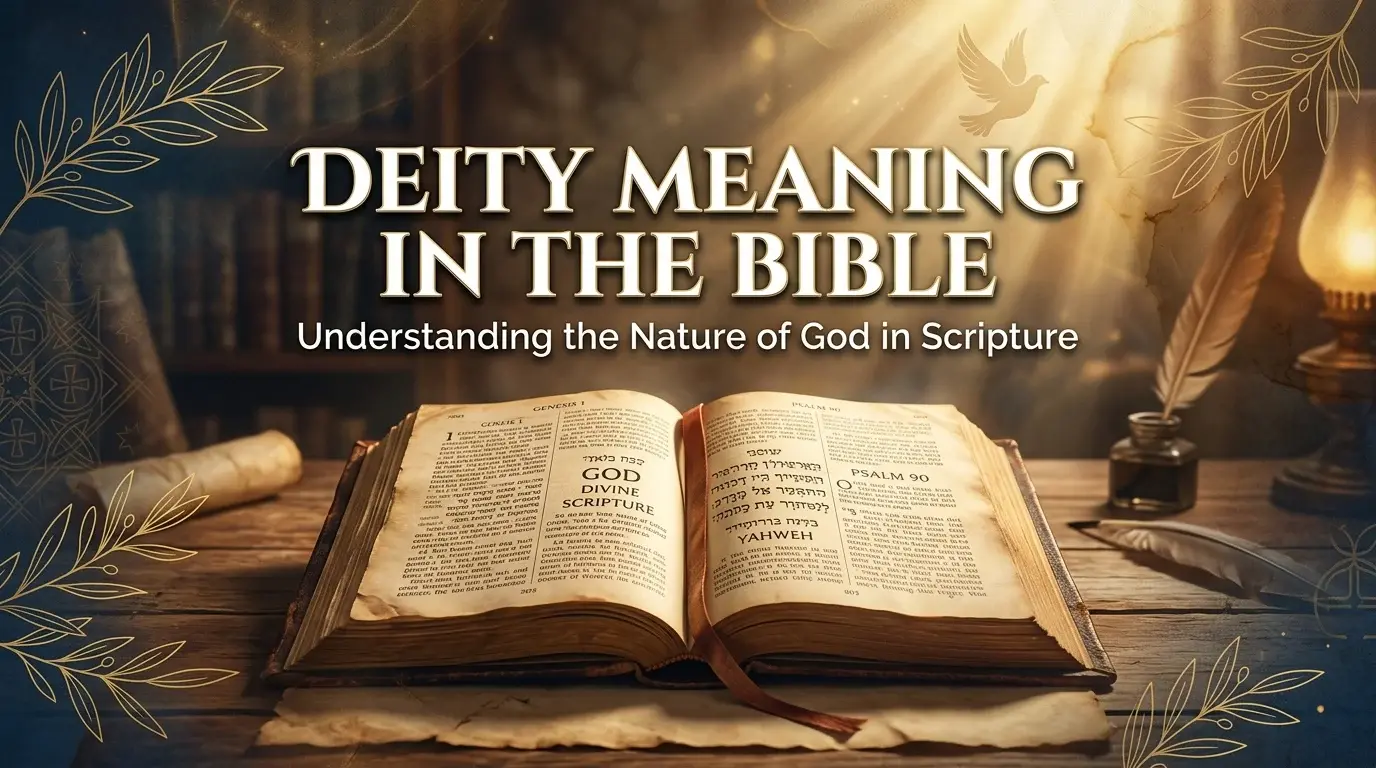
Have you ever sat in a quiet moment, looking at the night sky, and wondered who exactly God is and what makes Him different from everything else in creation? Many believers ask this same question when they come across the word “deity” in a sermon, a Bible study, or a theology book.
People search for the deity meaning in the Bible because they want clarity. They want to know whether the term refers only to God, or whether Scripture uses it more broadly. They also want to understand how this word connects to the nature of Jesus Christ and the Holy Spirit.
This article walks through the Hebrew and Greek roots, the historical background, and the spiritual truths behind this word. By the end, you will have a clear, faith-filled understanding rooted in Scripture, not guesswork.
Quick Answer ⚡ What Does Deity Mean in the Bible?
In the Bible, “deity” refers to the nature, essence, or being of God — His divine identity as the one true, supreme, eternal Creator. The deity meaning in the Bible points to God’s complete divine nature, fully expressed in the Father, the Son, and the Holy Spirit, as opposed to false gods or idols worshiped by nations around Israel.
Biblical Meaning of Deity 📖
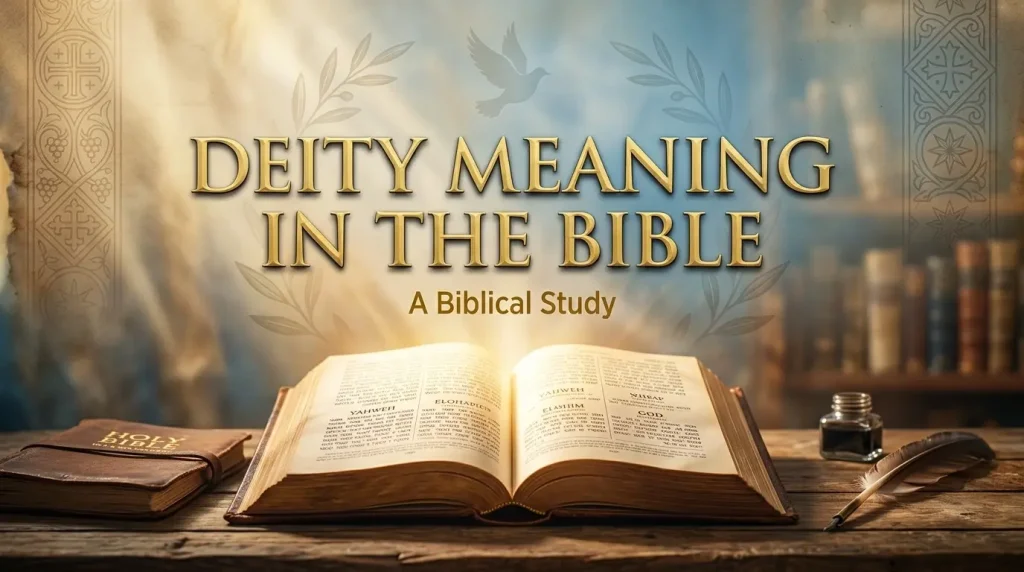
Understanding the biblical meaning of deity requires going back to the original languages of Scripture. The word carries weight far beyond a simple title — it describes the very essence of who God is.
Hebrew Meaning
The Old Testament most often uses the Hebrew word “Elohim” (אֱלֹהִים) to refer to God. Though plural in form, it is used as a singular noun when referring to the one true God, pointing to His fullness, majesty, and power.
Another related term is “El”, found in names like El Shaddai (God Almighty) and El Elyon (God Most High). These names express different facets of God’s divine character rather than separate gods.
Greek Meaning
In the New Testament, the Greek word “theotes” (translated “Godhead” or “Deity” in Colossians 2:9) describes the complete divine nature of God. A related word, “theios”, meaning “divine,” appears in Acts 17:29 and 2 Peter 1:3-4.
Literal and Spiritual Meaning
Literally, deity means “the state of being a god” or “divine nature.” Spiritually, it points to something deeper — the unchanging, eternal, all-powerful character of the Lord, who alone deserves worship.
Biblical Significance
This biblical meaning is foundational to the entire Christian faith. It affirms that God is not a created being, not a man elevated to divine status, and not one god among many. He is uniquely, eternally, and fully divine.
Key scripture references include:
- Exodus 3:14 — God reveals Himself as “I AM WHO I AM”
- Deuteronomy 6:4 — the declaration that the Lord is one
- Colossians 2:9 — the fullness of the Deity dwelling in Christ
- Isaiah 45:5 — there is no other God besides the Lord
Biblical Definition of Deity📖
In the Bible, the word deity refers to the divine nature or supreme being who is worthy of worship. From a biblical perspective, deity belongs fully and perfectly to God alone. Scripture teaches that the one true God is eternal, all-powerful, all-knowing, and the Creator of everything (Isaiah 45:5; Genesis 1:1).
The Bible also affirms the deity of Jesus Christ, meaning that Jesus is truly God as well as truly human. Passages such as John 1:1, John 20:28, and Colossians 2:9 declare that Jesus possesses the fullness of God’s divine nature. Likewise, the Holy Spirit is fully divine, completing the biblical doctrine of the Trinity—one God existing eternally as the Father, the Son, and the Holy Spirit.
Understanding the biblical definition of deity helps Christians recognize God’s unique authority, worship Him alone, and trust in His perfect power, wisdom, and love. Rather than describing many gods, the Bible consistently points to the one true and living God who revealed Himself through Jesus Christ and continues to work in believers through the Holy Spirit.
Historical & Biblical Context 🏛️
To fully grasp this scriptural meaning, it helps to look at how ancient cultures and biblical writers understood the word, and how that understanding shaped Israel’s worship and identity for centuries.
Old Testament Usage
Ancient Near Eastern cultures worshiped many gods — gods of war, harvest, weather, and fertility. Against this backdrop, Israel’s Scriptures made a radical claim: there is only one true God, and He alone is worthy of worship.
The Old Testament repeatedly contrasts the living God with lifeless idols. Psalm 115:4-7 describes these false deities as having mouths that cannot speak and eyes that cannot see, emphasizing their powerlessness compared to the Creator.
New Testament Relevance
The New Testament builds on this foundation while revealing something new — that the fullness of God’s deity is found in Jesus Christ. Colossians 2:9 states plainly that in Christ, the whole fullness of deity dwells bodily.
This is one of the clearest biblical interpretations supporting the divinity of Christ, a cornerstone of Christian theology.
Cultural Understanding in Biblical Times
In biblical times, the term carried real-life consequences. Claiming to be a deity, or rejecting the one true God for another, was not just a theological debate — it shaped worship practices, laws, family life, and national identity.
Kings in surrounding nations often claimed semi-divine status to secure political power, while temples to various gods stood as centers of community life. Against this backdrop, Israel’s insistence on one God set them apart in a way that was both spiritually significant and socially costly. Choosing to worship only the Lord often meant standing against powerful neighboring empires and their religious systems.
This historical tension helps modern readers appreciate why the prophets spoke so forcefully against idolatry. It was never simply about wrong religious practice — it was about protecting the identity and calling of God’s people from being absorbed into the spiritual confusion around them.
Different Deities and Their Meanings🌍
Throughout history, many cultures have worshipped different deities, believing they controlled nature, fertility, war, or other aspects of life. In biblical times, surrounding nations served gods such as Baal, Asherah, Molech, Dagon, and Chemosh, each associated with specific powers or responsibilities. However, the Bible repeatedly teaches that these deities were idols created by human hands and could not compare to the one true God (Psalm 115:4–8; Isaiah 44:9–20).
From a Christian perspective, the God of the Bible is fundamentally different from all other deities. He is not one god among many but the eternal Creator who alone deserves worship (Deuteronomy 6:4; Isaiah 45:5). Unlike pagan gods, the Lord is living, all-powerful, all-knowing, and personally involved in the lives of His people.
Understanding the different deities mentioned in Scripture helps readers appreciate why God continually called Israel to reject idolatry and remain faithful to Him. The Bible’s message is clear: while many nations worshipped various gods, there is only one true and sovereign God who revealed Himself through Jesus Christ and offers salvation to all who believe.
Is Deity Mentioned in the Bible? 📜
Yes, deity appears throughout Scripture, though English translations sometimes use related words like “Godhead,” “divine nature,” or simply “God.”
Where It Appears
- Romans 1:20 speaks of God’s eternal power and divine nature being clearly seen in creation.
- Colossians 2:9 directly uses the word “Deity” (Godhead in older translations) to describe Christ.
- Acts 17:29 warns against thinking the Deity is like an image made by human hands.
Why It Is Important
These passages matter because they protect a core truth of the Christian faith — that God’s nature cannot be reduced to a statue, an idea, or a human invention. He is living, personal, and supreme.
What It Teaches Believers
From a Christian perspective, these verses teach that true worship must be directed toward the living God alone, and that Jesus is not merely a prophet or teacher but fully God in human form.
Spiritual Meaning & Symbolism ✨

Beyond definitions, the deity meaning in the Bible carries spiritual weight for how believers live and worship today.
The One True God vs. False Gods
Scripture consistently calls people away from idols and toward the living God. This theme runs from Exodus 20:3 (“You shall have no other gods before me”) all the way through Revelation.
Worship vs. Idolatry
Worshiping anything other than God — money, fame, comfort, or self — repeats the ancient pattern of idolatry in a modern form. The spiritual meaning behind these warnings is timeless.
God’s Unchanging Nature
Deity also speaks to God’s unchanging character. Hebrews 13:8 reminds believers that Jesus Christ is the same yesterday, today, and forever — a comforting truth in an unstable world.
Lessons for Believers Today
Recognizing God’s true deity leads to humility, awe, and trust. It reminds believers that they are not in control, but they are deeply loved by the One who is.
Biblical Verses About Deity 📝
Here are key verses that reveal the deity meaning in the Bible and what they teach believers today.
Exodus 3:14
God tells Moses, “I AM WHO I AM,” revealing His self-existent, eternal nature. This name shows that God does not depend on anything outside Himself for His existence.
Lesson: God’s identity is unshakable and self-sufficient, giving believers a firm foundation for faith.
Deuteronomy 6:4
The Shema declares that the Lord is one God, a central confession of Israelite faith. It set Israel apart from surrounding nations that worshiped many gods.
Lesson: True faith begins with recognizing there is only one God worthy of complete devotion.
Isaiah 45:5
God declares that He alone is the Lord, and there is no other God besides Him. This verse strongly affirms monotheism within the Old Testament.
Lesson: Believers can rest in knowing that no other power rivals God’s authority over creation.
Colossians 2:9
Paul writes that in Christ, the fullness of the Deity dwells in bodily form. This is one of the clearest New Testament statements about Christ’s divine nature.
Lesson: Jesus is not a lesser being or a created angel — He is fully God, worthy of worship.
John 1:1
John describes the Word as being with God and being God from the very beginning, identifying Jesus with God’s eternal nature.
Lesson: Christ’s deity is not a later addition to Scripture but woven into the Bible’s earliest theology.
Romans 1:20
Paul explains that God’s eternal power and divine nature are visible through creation, leaving humanity without excuse for unbelief.
Lesson: Creation itself testifies to the reality of God’s deity, inviting reflection and worship.
Acts 17:29
Paul warns the Athenians against thinking the Deity resembles gold, silver, or stone shaped by human skill and imagination.
Lesson: God cannot be reduced to an image or object; He is far greater than anything human hands can create.
Corinthians 8:5-6
Paul acknowledges that many “gods” are worshiped in the world, but for believers there is only one God, the Father, and one Lord, Jesus Christ.
Lesson: Christian faith centers on a relationship with the one true God, not a collection of competing spiritual powers.
Life Lessons for Christians 🙏
Understanding deity is not just an academic exercise. It shapes daily Christian living in practical ways.
Avoid Pride and Ego
Recognizing God’s supreme nature naturally humbles the human heart, reminding believers that they are creatures, not creators.
Focus on Eternal Values
Since God’s deity is eternal and unchanging, believers are encouraged to invest in what lasts — faith, love, and obedience — rather than fleeting things.
Strengthen Prayer Life
Knowing God as fully divine, personal, and present deepens prayer, turning it from routine words into genuine communion with a living God.
Walk in Humility
A right understanding of God’s greatness leads naturally to humility, since no human achievement compares to His majesty.
Trust God’s Guidance
Because God’s nature is faithful and unchanging, believers can rely on God’s guidance even during seasons of confusion or hardship. His character does not shift with circumstances, which means His promises remain trustworthy even when life feels uncertain.
Live with Purpose
When believers truly grasp who God is, daily life takes on new meaning. Work, relationships, and even ordinary tasks become opportunities to honor a God who is fully present, fully powerful, and fully good.
The Biblical View of Deity in Christianity✝️
Christianity teaches that there is one true and eternal God who alone possesses full deity. Unlike ancient religions that worshipped many gods, the Bible declares that the Lord is the only Creator, Sustainer, and Ruler of all things (Deuteronomy 6:4; Isaiah 45:5). His divine nature is characterized by perfect holiness, infinite wisdom, unlimited power, and unfailing love.
A central Christian belief is the doctrine of the Trinity, which affirms that God exists as one Being in three distinct Persons: the Father, the Son (Jesus Christ), and the Holy Spirit. Each Person is fully God, sharing the same divine essence, yet they are not three separate gods. This truth is revealed throughout Scripture, with passages such as Matthew 28:19 and 2 Corinthians 13:14 highlighting the unity and distinction within the Godhead.
The Bible also emphasizes the deity of Jesus Christ, teaching that He is fully God and fully man. Verses like John 1:1, John 10:30, and Colossians 2:9 affirm His divine nature and His role in God’s plan of salvation. Likewise, the Holy Spirit is fully divine, actively guiding, comforting, and empowering believers.
Understanding the biblical view of deity strengthens a Christian’s faith by revealing God’s unique nature and His desire for a personal relationship with His people. It reminds believers to worship God alone, trust in His sovereignty, and live in obedience to His Word.
FAQs❓
1. What does deity mean in Hebrew?
The closest Hebrew term is “Elohim,” a name for God that conveys majesty, power, and fullness. Though plural in grammatical form, it is used to describe the one true God, emphasizing His complete and supreme divine nature above all created beings.
2. Is deity the same as God in the Bible?
Yes, in most biblical contexts, deity refers directly to God’s divine nature and identity. While “God” is often used as a name or title, “deity” describes the essence and being behind that title — His eternal, all-powerful, and unique divine character.
3. Why does the Bible warn against worshiping other deities?
The Bible warns against worshiping other deities because they are powerless, lifeless, and unable to save. True worship belongs only to the living God, who created all things and alone deserves complete devotion and trust.
4. What is the difference between Elohim and Yahweh?
Elohim describes God’s nature as the supreme divine being, while Yahweh (often rendered “the LORD”) is God’s personal, covenant name revealed to Israel. Together, they show God as both majestic Creator and personal, relational God.
5. How can Christians grow in understanding God’s deity?
Christians can grow by studying Scripture, praying regularly, and reflecting on God’s character revealed in both the Old and New Testaments. Worship, community, and quiet meditation also deepen one’s grasp of God’s divine nature over time.
6. Does the Bible ever call humans or angels “gods”?
Psalm 82:6 uses the term “gods” for human judges representing divine authority, and some passages reference spiritual beings. However, Scripture is clear that none of these share God’s eternal, self-existent deity. He alone is truly and fully divine.
Conclusion:
The meaning of the deity in the Bible points to something far greater than a dictionary definition. It reveals the very heart of who God is: eternal, unchanging, personal, and supreme over all creation.
From the burning bush moment with Moses to Paul’s bold declaration that the fullness of Deity dwells in Christ, Scripture paints a consistent picture: there is one true God, and He alone deserves worship.
May this understanding draw you closer to Him, replacing pride with humility and distraction with devotion. As you reflect on these truths, may your faith grow deeper and your trust in God’s guidance grow stronger each day.
Discover More Post:
Titus Meaning in the Bible: A Powerful Christian Insight
What Does 222 Mean in the Bible? A Biblical Guide
What Does Vanity Mean in the Bible? A Biblical Guide