Have you ever felt upset after seeing someone treated unfairly? Maybe you saw someone lie, cheat, or hurt others, and thought, “This isn’t right.”
The Bible often describes this strong feeling as indignation. But what does indignation mean in the Bible?
Is it always wrong, or can it be a righteous response to sin and injustice? Scripture teaches that God shows indignation against evil, while also calling His people to respond with wisdom, self-control, and love.
This shows that not all anger is sinful. In many cases, biblical indignation reflects a desire for justice, truth, and holiness.
In this article, you’ll discover the biblical meaning of indignation, its spiritual significance, and the practical lessons it offers for living a Christ-centered life.
Biblical Meaning of Indignation
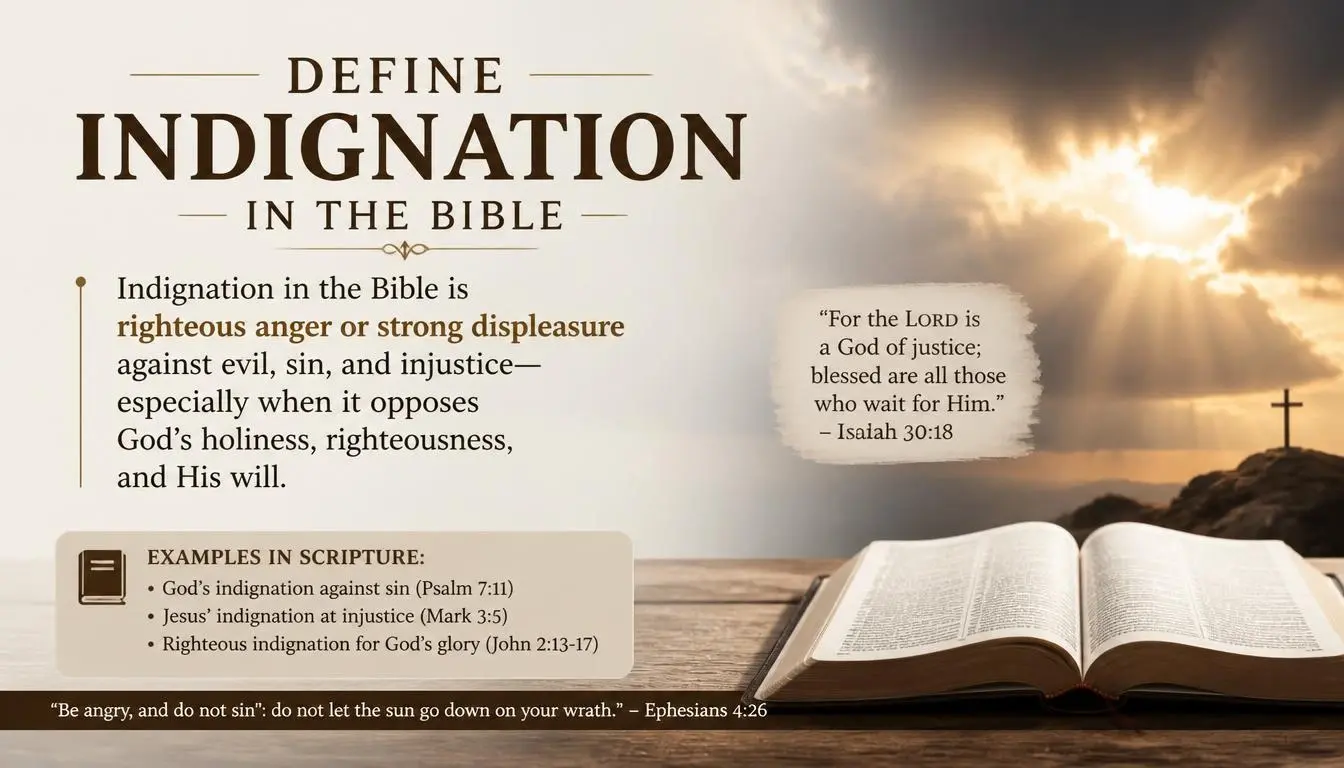
The define indignation in the Bible question begins with understanding the word itself. In Scripture, indignation refers to strong displeasure, righteous anger, or deep outrage against sin, injustice, or evil. Unlike selfish anger, biblical indignation is often connected to God’s perfect justice.
God is holy and cannot ignore sin. Throughout the Bible, His indignation is shown as a just response to rebellion, wickedness, and oppression. His anger is never unfair or out of control. Instead, it flows from His perfect love and righteousness.
One clear example is found in Psalm 7:11:
God is a righteous judge, and a God who feels indignation every day.
This verse reminds believers that God sees every act of injustice. Nothing escapes His notice, and His response is always fair.
Another important passage is Isaiah 13:9, where God’s indignation is connected with His judgment against persistent sin. These verses show that God’s indignation is not revenge but a holy response to evil.
Jesus and Righteous Indignation
Jesus also showed righteous indignation during His earthly ministry. When He entered the temple and found people turning God’s house into a marketplace, He drove out the merchants and overturned their tables (Matthew 21:12–13).
His actions were not driven by selfish anger. They came from His love for God’s holiness and His desire to protect true worship.
This teaches Christians that there is a difference between righteous indignation and sinful anger.
Human Indignation
People can also experience indignation, but the Bible warns that human anger can easily become sinful if it is controlled by pride or selfishness.
Ephesians 4:26 says:
Be angry and do not sin.
This verse recognizes that anger itself is not always wrong. The important question is what we do with it. Believers are called to respond with wisdom, forgiveness, and self-control instead of hatred or revenge.
Positive and Warning Meanings
Biblical indignation carries both encouragement and warning.
Positive meanings include:
- A desire to defend truth.
- Standing against injustice.
- Loving what is right.
- Protecting the weak and innocent.
- Honoring God’s holiness.
Warning meanings include:
- Allowing anger to become bitterness.
- Seeking revenge instead of trusting God.
- Speaking harshly without love.
- Acting out of pride rather than righteousness.
The Bible encourages believers to let God be the final judge while living lives marked by grace and truth.
Spiritual Significance and Symbolism
The Christian meaning of indignation goes beyond emotions. Spiritually, it reminds believers that God deeply cares about holiness and justice.
When Christians feel sorrow over sin or injustice, it can become an opportunity for spiritual growth rather than sinful reaction. Instead of responding with uncontrolled anger, they can bring those feelings to God through prayer.
Indignation also symbolizes a heart that desires God’s will. As believers grow in faith, they begin to hate what harms people and love what honors the Lord.
For example, a parent may feel indignation when a child is bullied. Instead of seeking revenge, they choose to protect the child while trusting God for wisdom. In the same way, Christians are called to stand for truth with both courage and compassion.
This biblical symbolism points believers toward a life shaped by love, justice, humility, and mercy.
As the Holy Spirit works in a person’s heart, indignation becomes less about personal offense and more about honoring God and helping others.
Biblical Interpretations in Dreams or Real Life
Some people wonder whether feelings of indignation in dreams carry a spiritual message.
Dreams in the Bible sometimes revealed God’s guidance, but not every dream has a spiritual meaning. If someone dreams about witnessing injustice or feeling strong indignation, it may encourage them to examine their heart, pray for wisdom, and seek God’s direction.
In real life, indignation often appears when people witness dishonesty, cruelty, or unfair treatment. These moments can remind believers to act with kindness, speak the truth, and trust God rather than reacting in anger.
A peaceful response to injustice may reflect spiritual maturity and confidence in God’s justice. On the other hand, overwhelming rage can become a reminder to surrender emotions to Christ and ask Him for peace.
Whether experienced in dreams or daily life, the Bible encourages Christians to seek God’s guidance before acting.
Practical Lessons & Faith Insights
Biblical indignation teaches believers to love what God loves and reject what dishonors Him.
When you feel anger over wrongdoing:
- Pray before reacting.
- Choose forgiveness instead of revenge.
- Stand for truth with kindness.
- Trust God’s perfect justice.
- Let the Holy Spirit guide your response.
A heart surrendered to God can turn righteous concern into loving action that reflects Christ.
FAQs
What does indignation mean in the Bible?
In the Bible, indignation means strong, righteous displeasure toward sin, injustice, or evil. It often describes God’s holy response to wrongdoing.
Is indignation the same as anger?
No. Anger can be either righteous or sinful. Biblical indignation usually refers to justified anger that is rooted in truth and justice rather than selfishness.
Did Jesus show indignation?
Yes. Jesus showed righteous indignation when He cleansed the temple because people had dishonored God’s house (Matthew 21:12–13).
Is God’s indignation sinful?
No. God’s indignation is always holy, just, and perfect. Unlike human anger, it is never selfish, uncontrolled, or unfair.
How should Christians respond to feelings of indignation?
Christians should pray, seek God’s wisdom, respond with love, avoid revenge, and trust the Lord to bring justice in His perfect timing.
Conclusion:
To define indignation in the Bible is to understand a powerful expression of righteous displeasure against sin and injustice.
God’s indignation reflects His perfect holiness, while believers are called to respond with wisdom, love, and self-control.
Rather than allowing anger to rule the heart, Christians can trust God’s justice, seek His guidance through prayer, and live as people who reflect His truth and compassion.
As you walk with Christ, may your heart grow in both courage and grace, always seeking God’s will above your own.