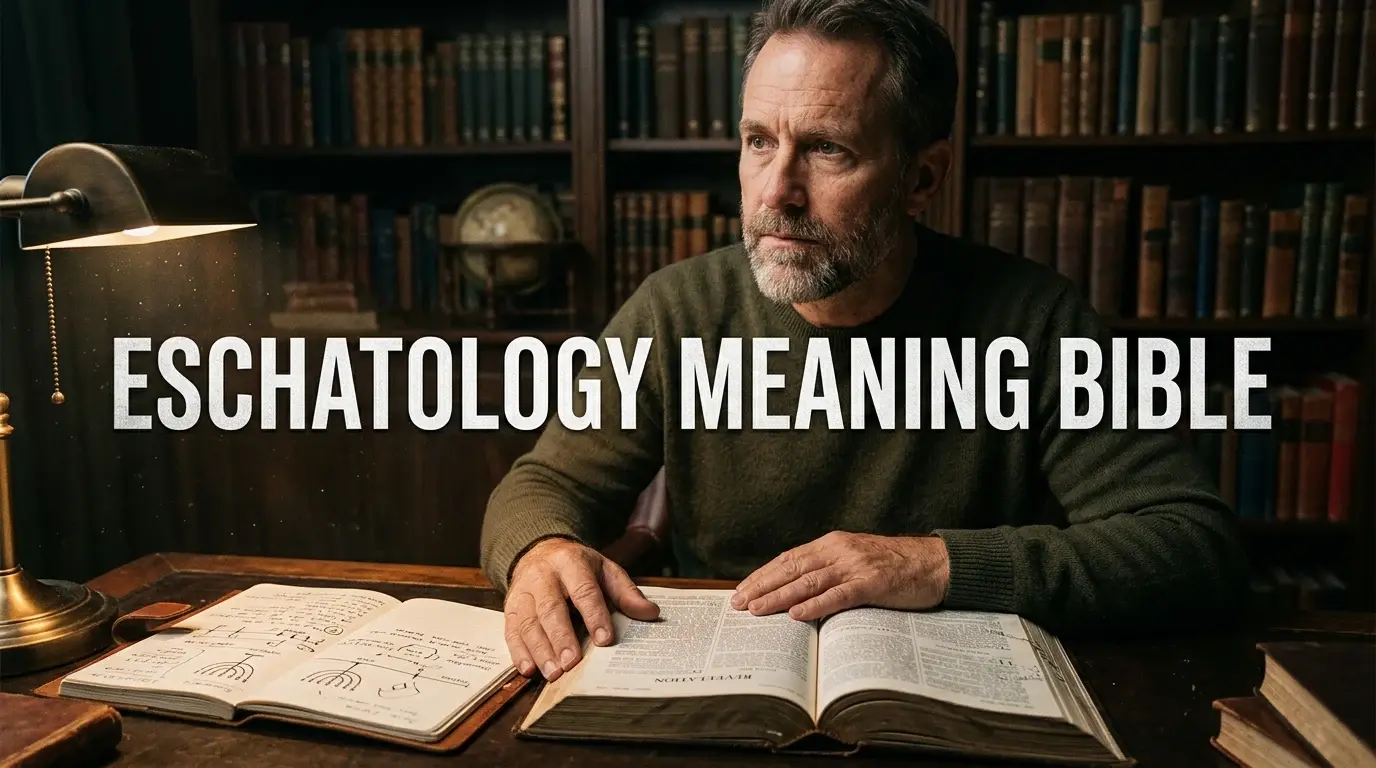
Eschatology is the biblical study of the last things: Christ’s return, the resurrection, the final judgment, and God’s eternal kingdom.
It is not only about the end of the world. It shows how God will keep His promises, defeat evil, and make all things new.
Eschatology Pronunciation
Eschatology is pronounced es-kuh-TOL-uh-jee. The stress falls on the third syllable, “TOL.”
Eschatology Greek Meaning
The word comes from two Greek words: eschatos, meaning “last,” and logos, meaning “word” or “study.” Together they mean “the study of the last things.” This is why the term refers to God’s final purpose for history and creation.
Read More: Spiritual Meaning of the Name Logan in the Bible: A Christian GuideChristian Eschatology Meaning
In Christianity, eschatology means the biblical teaching about what God will do at the end of history. It includes four main truths:
- Jesus will return. In John 14:3, Jesus promised, “I will come back and take you to be with me that you also may be where I am.”
- God will judge the world. Revelation 20:11–15 describes a final judgment carried out with perfect justice. For believers, Christ has already paid the price for sin on the cross.
- The dead will be raised. In 1 Corinthians 15:52, Paul teaches that believers will be raised to eternal life when Christ returns.
- God will make all things new. Revelation 21:1–4 describes a new heaven and a new earth, where there is no more death, pain, or tears, and God lives with His people.
Why Is Eschatology Important in Christianity?
Eschatology matters because it shapes how believers live today.
- It gives hope. History is moving toward God’s perfect purpose, not toward chaos.
- It builds trust. God has kept every promise in Scripture, so Christians can trust Him with the future.
- It calls for readiness. Jesus said in Matthew 24:42, “Keep watch, because you do not know on what day your Lord will come.” This is a call to faithful daily living, not fear.
- It reminds us this world is not our final home. Our true hope is God’s eternal kingdom.
Biblical Interpretations in Dreams or Real Life
Some people dream about the end times or wonder if world events are signs of biblical prophecy. Others simply become curious after reading Revelation or hearing sermons about Christ’s return.
Dreams about the future should be approached with wisdom. The Bible shows that God sometimes used dreams to communicate, but not every dream carries a divine message.
If a dream encourages greater faith, repentance, or trust in God, it may inspire healthy spiritual reflection. If it creates fear or confusion, believers should turn to Scripture and prayer instead of making quick conclusions.
Real-life events can also remind Christians that God’s promises are true. Natural disasters, wars, or global changes often make people think about the future. Yet Jesus taught His followers not to panic but to remain faithful.
The best response is always to stay close to God’s Word, pray regularly, and trust His perfect timing rather than trying to predict every future event.
Eschatology Bible Study: Where to Begin
If you want to study eschatology in Scripture, start with these passages:
- Daniel 7–12: visions of God’s kingdom and the end of earthly empires
- Matthew 24–25: Jesus’ teaching on His return and being ready
- 1 Thessalonians 4–5: the return of Christ and the hope of the resurrection
- 1 Corinthians 15: the resurrection of believers
- Revelation 19–22: final victory, judgment, and the new creation
Read slowly, pray for understanding, and compare Scripture with Scripture. Christians hold different views on the timing and order of end-time events, so focus first on the truths all believers agree on: Christ will return, evil will be judged, and God’s kingdom will be complete.
Spiritual Significance and Symbolism
The eschatology meaning in the Bible is more than a timeline of future events. It carries a powerful spiritual message for every believer today.
First, it reminds us that God keeps His promises. Throughout Scripture, God fulfilled every promise He made. Christians can trust that He will also fulfill His promises about the future.
Second, eschatology teaches believers to live with hope instead of fear. The world may experience trouble, but God’s plan is never out of control.
Think about someone planting seeds in a garden. At first, nothing seems to happen. Yet with time, growth appears. In the same way, God’s plan unfolds according to His perfect timing, even when we cannot see it.
Eschatology also encourages spiritual growth. Knowing that Jesus will return motivates believers to pray, forgive others, love their neighbors, and remain faithful each day.
Finally, it reminds Christians that this world is not their final home. Their true hope is found in God’s eternal kingdom.
This biblical symbolism points to complete restoration, victory over evil, and everlasting fellowship with God.
Practical Lessons
- Trust God’s plan, even when life feels uncertain.
- Stay close to Scripture and pray faithfully.
- Share the hope of Jesus with others.
- Live with love and forgiveness, knowing Christ will return.
FAQs
What does eschatology mean in the Bible?
It is the study of the last things: Christ’s return, the resurrection, the final judgment, and God’s eternal kingdom.
How do you pronounce eschatology?
es-kuh-TOL-uh-jee.
Is eschatology only about the end of the world?
No. It also focuses on God’s plan to restore creation and establish His everlasting kingdom.
Which Bible books teach about eschatology?
Major passages are in Daniel, Matthew 24–25, 1 Thessalonians, 1 Corinthians 15, and Revelation.
Should Christians fear the end times?
No. The Bible calls believers to trust God and look forward to Christ’s return with hope.
Conclusion
The eschatology meaning in the Bible is a message of hope and God’s faithful promises.
Jesus will return, evil will be defeated, and God’s people will live with Him forever.
Instead of fearing the future, Christians can live each day trusting God’s perfect plan.

I am a Christian writer and Bible researcher passionate about making Scripture easy to understand. Through biblical meanings, Hebrew insights, and faith-based studies, I help readers grow in their knowledge of God’s Word and strengthen their walk with Christ.