Names often carry deep meaning. Parents usually choose a name with hope, purpose, and a vision for their child’s future.
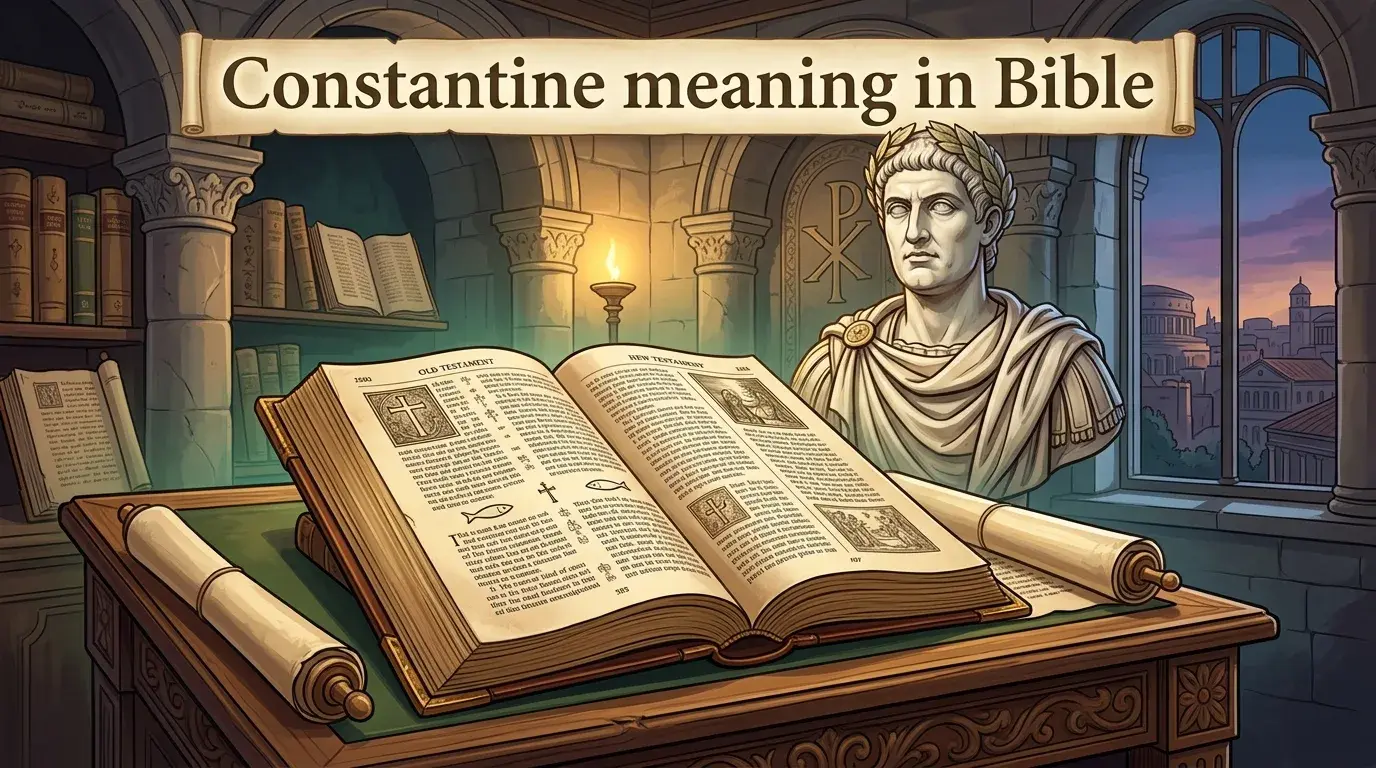
Many people search for the Constantine meaning in Bible because they want to know if the name has a biblical connection.
Although Constantine is not mentioned in the Bible, he played one of the most important roles in Christian history.
As the Roman Emperor, Constantine ended the persecution of Christians and made it legal to follow Christ openly. His actions changed the future of Christianity forever.
In this article, you’ll discover the meaning of the name Constantine, its historical background, its spiritual significance, and the faith lessons Christians can learn from his life.
Quick Answer: What Is the Constantine Meaning in Bible?
The name Constantine does not appear in the Bible text itself. It is a Latin name meaning “constant” or “steadfast.” Constantine the Great was the Roman Emperor who legalized Christianity in AD 313. While not a biblical figure, his life deeply shaped Christian history and carries rich spiritual significance for believers worldwide.
Meaning of the Name Constantine — Latin and Spiritual Roots📖
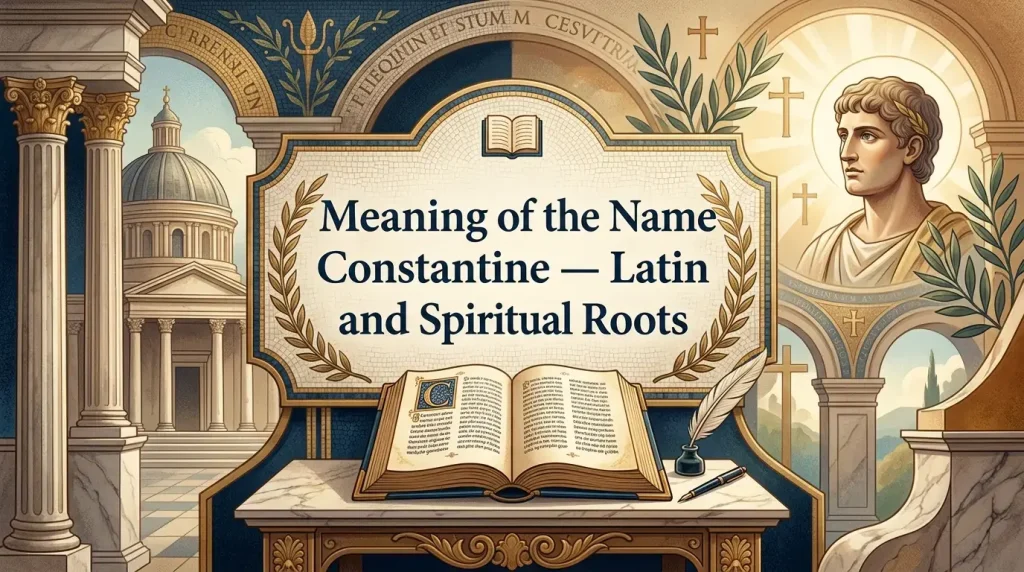
Latin Origin and Literal Meaning
The name Constantine comes from the Latin word “Constantinus,” which is derived from “constans” — meaning constant, steadfast, or firm. It points to someone who does not waver, who holds their ground, and who remains faithful under pressure.
In ancient Rome, this was considered a name of great honor. A “constant” person was reliable, immovable, and trustworthy — qualities essential for leadership and respected in society.
Spiritual Meaning of Constantine
When you look at the name through a spiritual lens, the meaning becomes even more powerful. Steadfastness and constancy are deeply biblical virtues.
Scripture consistently calls believers to be unmovable in faith. Paul writes in 1 Corinthians 15:58, “Stand firm. Let nothing move you.” James 1:4 speaks of patience that leads to maturity and completeness. The entire letter to the Hebrews encourages believers to hold fast to their confession without wavering (Hebrews 10:23).
The spiritual meaning of the name Constantine — one who is firm and constant — aligns beautifully with the Bible’s call to enduring, steadfast faith.
Is Constantine in the Bible?
The name Constantine does not appear in Scripture. He was born around AD 272, nearly two centuries after the New Testament was completed. However, the spiritual qualities his name represents — constancy, faithfulness, and standing firm — are woven all throughout both the Old and New Testaments.
More importantly, the historical events surrounding Constantine were so transformative for Christianity that understanding him is essential for any serious student of biblical history and the Christian faith.
Historical and Biblical Context of Constantine🏛️
Who Was Constantine the Great?
Constantine I, known as Constantine the Great, was Roman Emperor from AD 306 to 337. He ruled over the largest empire in the Western world at the time. Under previous emperors, Christians had faced horrific persecution — imprisonment, torture, and death for their faith in Jesus Christ.
All of that changed under Constantine.
In AD 312, on the eve of the Battle of Milvian Bridge, Constantine reportedly saw a vision — a cross of light in the sky with the words “In this sign, conquer.” He ordered his soldiers to mark their shields with the Chi-Rho symbol (☧), the first two letters of Christ’s name in Greek. He won the battle decisively.
This event transformed Constantine’s relationship with the Christian faith and set the stage for one of the most consequential decisions in world history.
The Edict of Milan — Christianity Legalized
In AD 313, Constantine issued the Edict of Milan, co-signed with his co-emperor Licinius. This historic decree granted religious freedom throughout the Roman Empire — and specifically ended the persecution of Christians.
For the first time in three centuries, Christians could worship openly without fear of arrest or execution. Churches could be built. Scriptures could be read in public. The cross could be displayed without danger.
The Edict of Milan did not make Christianity the official state religion — that came later under Emperor Theodosius in AD 380. But it opened the door completely. God’s guidance was working through political history in a way no one had expected.
The Council of Nicaea
In AD 325, Constantine convened the Council of Nicaea — the first ecumenical council of the Christian Church. Bishops from across the empire gathered to settle critical theological disputes, most importantly the nature of Jesus Christ.
The council produced the Nicene Creed — the foundational statement of Christian doctrine still recited in churches around the world today. While Constantine’s exact faith remains a topic of scholarly discussion, his role in calling and hosting this council permanently shaped Christian theology.
Constantine’s Baptism
Constantine was baptized as a Christian shortly before his death in AD 337. This was not unusual for the era — some Christians in that period delayed baptism until near death, believing it would wash away a lifetime of sins. Regardless of the timing, Constantine died as a confessed Christian and was buried with full Christian honors.
Is Constantine Mentioned in the Bible? What Scripture Says🔍
Constantine himself is not mentioned in the Bible — the New Testament was completed long before he was born. However, several biblical passages are often connected to his story in powerful ways.
Daniel’s Prophecy and World Empires
The book of Daniel contains remarkable prophecies about successive world empires (Daniel 2 and Daniel 7). Many scholars see Rome as the fourth great empire in Daniel’s vision — the empire that would be present during the time of Christ and the early Church. Constantine ruled this very empire and redirected its power toward protecting Christianity rather than destroying it.
Romans 13 and God’s Sovereignty Over Government
Paul writes in Romans 13:1, “There is no authority except that which God has established. The authorities that exist have been established by God.” Constantine’s rise to power, from a biblical perspective, can be understood through this lens — God working through earthly rulers to accomplish His purposes for the Church.
Isaiah 49:23 — Kings as Servants of God’s People
Isaiah prophesied, “Kings will be your foster fathers, and their queens your nursing mothers.” Many early Christians saw Constantine as the fulfillment of prophecies like this — a king who, instead of persecuting God’s people, became their protector and guardian.
Revelation 2:10 — Be Faithful Unto Death
This verse, spoken to the Church at Smyrna, captures the era that Constantine ended: “Be faithful, even to the point of death, and I will give you life as your victor’s crown.“ Thousands of Christians before Constantine had lived — and died — by these words. Constantine’s reign was, in many ways, God’s answer to their faithfulness.
Spiritual Meaning and Symbolism of Constantine’s Legacy🕊️
From Persecution to Protection — A Story of God’s Timing
The story of Constantine carries a profound spiritual message: God’s timing is not our timing, but it is always perfect.
For nearly 300 years, the Church endured wave after wave of brutal persecution. Believers must have wondered — how long, Lord? Yet in one generation, God raised up an emperor who ended it all. The Church that had survived in underground catacombs was suddenly allowed to build magnificent cathedrals.
This is a pattern we see throughout Scripture. Joseph waited in prison before becoming second in command of Egypt. Israel suffered in slavery for 400 years before the Exodus. God’s guidance is real, even when it feels slow or hidden.
Constancy in Faith — The Virtue His Name Carries
The name itself — meaning “steadfast and constant” — preaches a sermon. Whether or not you admire Constantine the emperor, the virtue his name represents is one every Christian is called to embody.
Hebrews 12:1 urges us to “run with perseverance the race marked out for us.” James 1:12 promises, “Blessed is the one who perseveres under trial.” Paul declares in Philippians 4:11, “I have learned, in whatever state I am, to be content.” These are all expressions of constancy — the spiritual quality at the heart of this name.
The Tension Between Church and Power
Constantine’s legacy also carries a warning. When the Church merged with imperial power, it gained protection but also faced new temptations — compromise, politics, and the blurring of spiritual and earthly authority.
This tension remains relevant today. Christians must always guard against allowing worldly power to dilute the purity of the gospel. The Church’s strength has never come from political influence — it comes from the Holy Spirit, prayer, and faithful obedience to Christ.
A Reminder That God Uses Imperfect People
Constantine was not a perfect man. He made decisions that historians debate to this day. Yet God used him to protect and preserve the Christian faith at a critical moment in history.
This is deeply biblical. God used Moses despite his murder charge. He used David despite his failures. He used Paul despite his violent past. The story of Constantine reminds us that God’s purposes are never limited by human imperfection.
📜 Biblical Verses That Speak to Constantine’s Story and Legacy
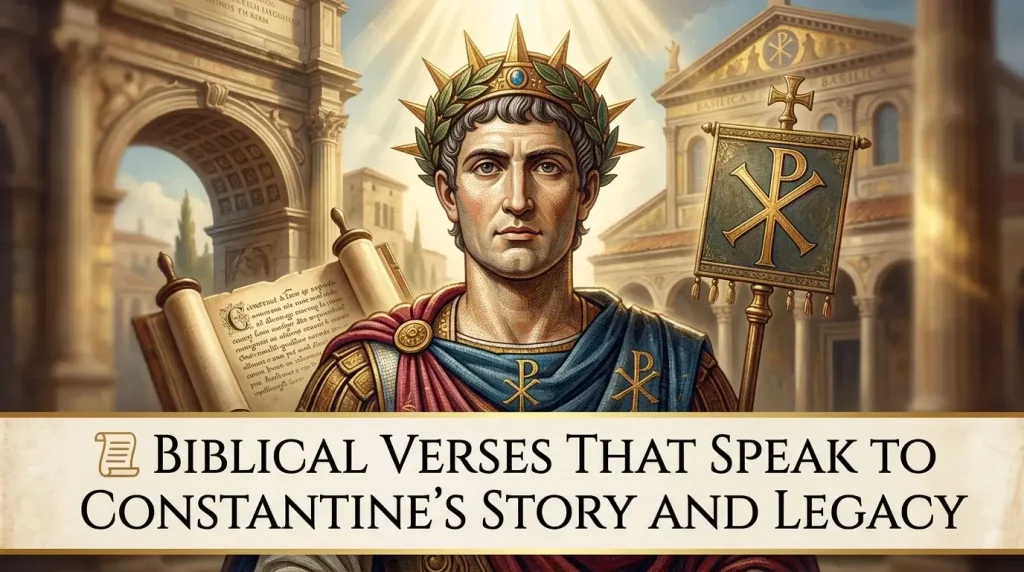
1. Romans 13:1
“Let everyone be subject to the governing authorities, for there is no authority except that which God has established.”
Explanation: Paul wrote these words during a time of Roman rule — the same empire Constantine would one day lead. This verse establishes that God is sovereign over political authority. Constantine’s rise to power, from a faith perspective, was not accidental. God placed him there for a purpose in the story of His Church.
Practical Lesson: Trust that God is sovereign over the governments and leaders of your day, even when politics seem chaotic or uncertain. He is working behind the scenes.
2. Daniel 2:21
“He changes times and seasons; he deposes kings and raises up others.”
Explanation: This verse from Daniel is one of the most powerful declarations of God’s sovereignty in all of Scripture. The rise of Constantine — from a military general to sole ruler of the Roman Empire — reflects exactly this kind of divine orchestration. God raised him up at precisely the right moment for the Church.
Practical Lesson: When you feel like the world is out of control, remember that God still holds history in His hands. He raises up and removes leaders according to His purposes.
3. Isaiah 49:23
“Kings will be your foster fathers, and their queens your nursing mothers… Then you will know that I am the Lord; those who hope in me will not be disappointed.”
Explanation: The early Church fathers saw Constantine as a fulfillment of prophecies like this one. For generations, kings had persecuted God’s people. Under Constantine, a king became their protector. God’s word proved true — those who hoped in Him were not ultimately disappointed.
Practical Lesson: Hold on to God’s promises, even when circumstances make them seem impossible. He is faithful to every word He has spoken.
4. Revelation 2:10
“Be faithful, even to the point of death, and I will give you life as your victor’s crown.”
Explanation: These words were spoken to Christians in Smyrna who faced execution for their faith. Many thousands of believers lived — and died — by this verse before Constantine ended the persecutions. Their faithfulness was not wasted. God honored every martyr, and He used their witness to grow the very Church that Constantine would eventually protect.
Practical Lesson: Faithfulness in suffering always produces fruit. Your perseverance under pressure is never wasted in God’s economy.
5. 1 Corinthians 15:58
“Stand firm. Let nothing move you. Always give yourselves fully to the work of the Lord, because you know that your labor in the Lord is not in vain.”
Explanation: This verse captures the very spiritual meaning of the name Constantine — steadfastness. The Christians who endured Rome’s persecutions before Constantine stood firm when everything around them was shaking. And when Constantine rose to power, their long labor bore extraordinary fruit.
Practical Lesson: Never give up on doing good. Never quit serving God faithfully. The results may not come when you expect them, but your labor in Christ is never wasted.
6. Hebrews 10:23
“Let us hold unswervingly to the hope we profess, for he who promised is faithful.”
Explanation: The word “unswervingly” carries the same idea as the name Constantine — constant, firm, not moved. The Hebrew Christians to whom this letter was written faced persecution and were tempted to abandon their faith. This verse calls them back to the same quality of steadfastness that the name Constantine embodies.
Practical Lesson: Hold on to your faith with both hands. God’s faithfulness to His promises is the foundation that makes your steadfastness possible.
7. Proverbs 21:1
“In the Lord’s hand the king’s heart is a stream of water that he channels toward all who please him.”
Explanation: This verse beautifully describes God’s sovereign ability to direct the hearts of rulers. Whatever personal faith or motivations Constantine held, God was able to channel his decisions toward outcomes that protected and advanced the Church. This is God’s guidance working through human history.
Practical Lesson: Pray for your leaders. God is able to turn even the hearts of kings, presidents, and rulers toward outcomes that serve His greater purposes.
Life Lessons for Christians from Constantine’s Story🌱
1. Be Steadfast When Faith Is Costly
Before Constantine, being a Christian could cost you your life. The Christians of that era modeled the constancy that this name represents. In your own life, hold to your faith even when it is uncomfortable, unpopular, or costly.
2. Trust God’s Timing
The Church waited nearly three centuries for relief from persecution. God did not forget. His timing was precise and purposeful. Whatever you are waiting for — a breakthrough, a healing, a restoration — trust that God has not forgotten you.
3. Recognize God’s Hand in History
Constantine’s story teaches us to look for God’s fingerprints in world events. History is not random. God is working His purposes out through the rise and fall of nations, and He calls believers to live with that eternal perspective.
4. Guard Against Compromising the Gospel
Constantine’s legacy includes a warning: when the Church gains earthly power and comfort, it must remain vigilant about protecting the purity of the gospel. Stay rooted in Scripture, not in politics or cultural acceptance.
5. Let Your Name Mean Something
Whatever your name is, you can live out its best meaning. If you carry the name Constantine or simply aspire to its virtue, commit to being a person of constancy — reliable in faith, steadfast in love, immovable in hope.
❓ FAQs
1. What is the Constantine meaning in Bible?
Constantine does not appear in the Bible text itself. The name is Latin, meaning “constant” or “steadfast.”
2. What does the name Constantine mean spiritually?
Spiritually, Constantine means “one who is firm, steadfast, and constant.” These qualities are deeply valued in Scripture.
3. Did Constantine write or change the Bible?
No — this is a common myth. Constantine did not write or change the Bible. The Council of Nicaea in AD 325 addressed theological disputes about Christ’s nature, not the biblical canon.
4. Why is Constantine important to Christians?
Constantine ended the Roman persecution of Christians through the Edict of Milan in AD 313. He convened the Council of Nicaea in AD 325, which produced the Nicene Creed still used in churches today.
5. Is Constantine a good Christian name?
Yes — Constantine is a meaningful Christian name with a rich heritage. Its Latin meaning of “steadfast and constant” reflects core biblical virtues.
Conclusion:
Although the name Constantine does not appear in the Bible, it holds an important place in Christian history.
Its meaning, “steadfast and constant,” reflects the biblical call to remain faithful to God.
Constantine’s story reminds us that God can work through anyone to accomplish His plans. After years of persecution, God opened the way for Christianity to spread and grow.
No matter what challenges you face, stay faithful and trust God’s timing. He always keeps His promises, and His plans are never late.
Read More Post:
Deity Meaning in the Bible: What Scripture Reveals?
Caleb Meaning in Bible: A Story of Faith and Courage
Ava Name Meaning in Bible: Origin & Spiritual Significance

I am Rebecca Collins, a Christian writer and Bible researcher at BibleMeaningHub.com. I share insightful biblical interpretations and faith-based teachings to help readers better understand Scripture. My mission is to encourage spiritual growth and strengthen faith through God’s Word.