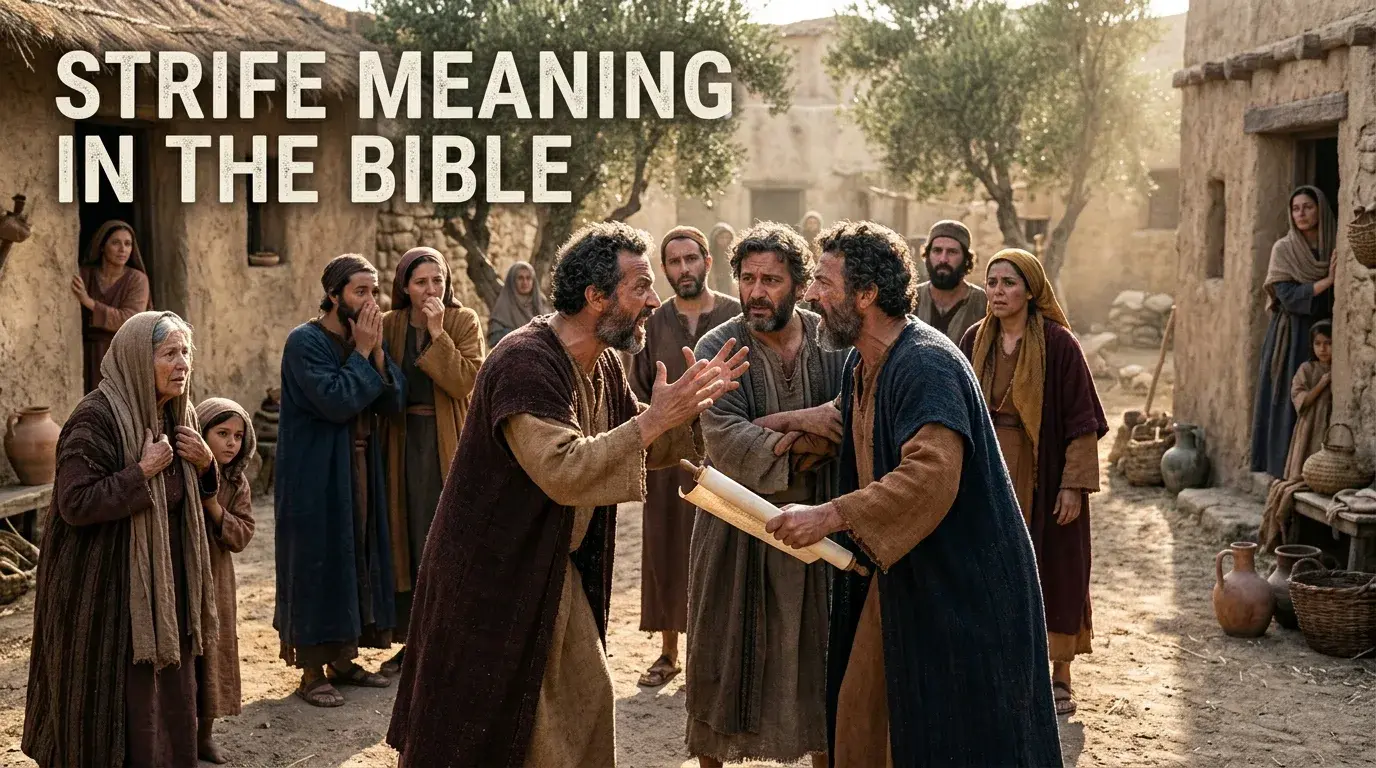
Conflict is a part of life. It can happen in families, friendships, churches, or even within our own hearts.
The Bible speaks clearly about these struggles and often uses the word strife to describe conflict, arguments, and division.
Understanding the strife meaning in the Bible helps us see why conflict happens, what God says about it, and how we can choose peace instead.
In this article, you’ll discover the biblical meaning of strife, key Bible verses, and practical lessons to help you live in greater unity and faith.
Quick Answer — What Does Strife Mean in the Bible?
Strife in the Bible refers to bitter conflict, quarreling, and discord between people. It describes ongoing contention that breaks relationships and dishonors God. Rooted in pride and selfish ambition, strife is consistently warned against in both the Old and New Testaments. God calls His people to pursue peace, humility, and unity rather than division.
Historical & Biblical Context of Strife📜
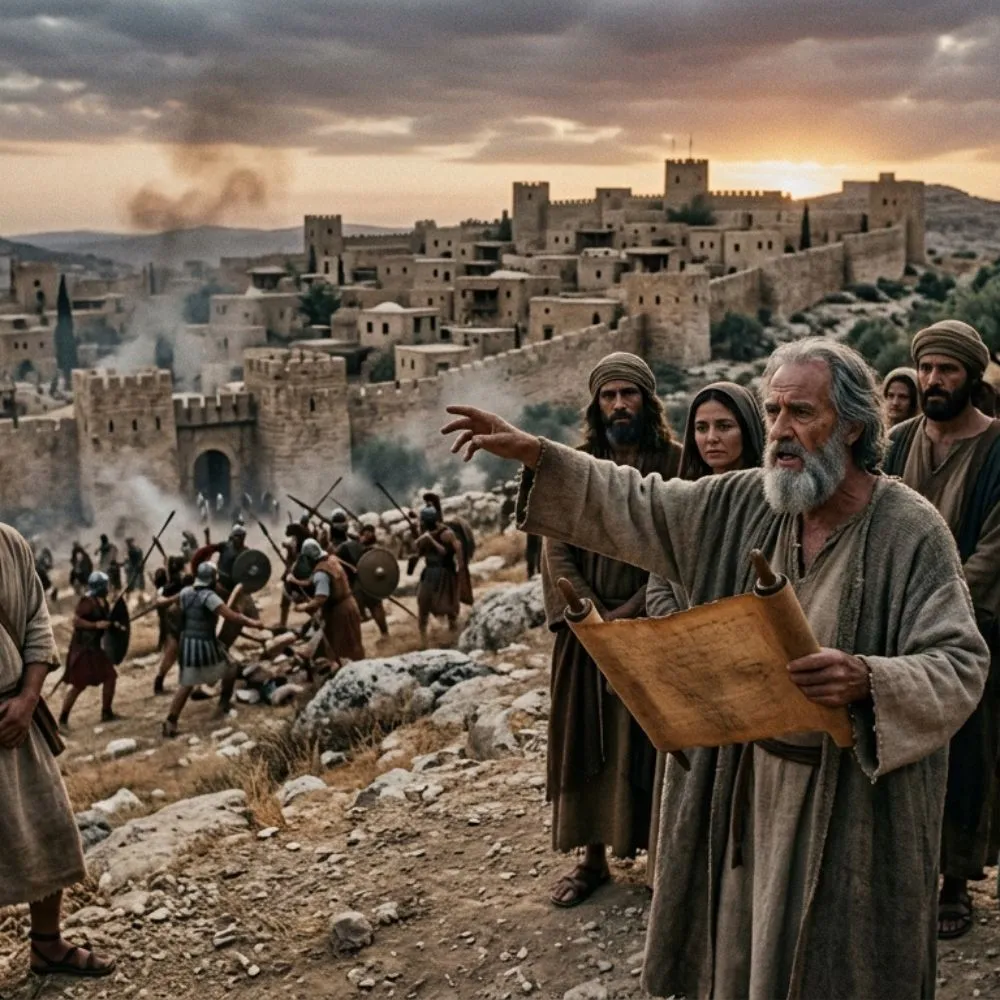
To understand strife in the Bible, we need to look at the world in which Scripture was written.
In the ancient Near East, conflict between teams, families, and communities was common. Disputes over land, inheritance, honor, and resources were everyday realities. The Hebrew people were no strangers to internal division — even among the twelve teams of Israel, tension and rivalry ran deep.
In the Old Testament, strife appears frequently in the wisdom literature. The book of Proverbs, in particular, addresses quarreling and contention with striking directness. The writers of Proverbs understood that words, pride, and anger were the seeds of lasting damage in a community.
In the New Testament, the Apostle Paul addresses strife in his letters to the early churches. The young church communities were experiencing real division — over leadership, spiritual gifts, Jewish and Gentile differences, and personal ambition. Paul consistently named strife as a work of the flesh and called believers to a higher standard of love and unity.
Culturally, honor and shame played a huge role in ancient societies. Public disputes were serious matters that could shatter entire families and communities. This is why the biblical writers treat strife not as a minor inconvenience but as a serious spiritual and social threat.
Biblical Meaning of Strife — Word Study🔤
Understanding strife begins with looking at the original languages of the Bible.
Hebrew Meaning
The primary Hebrew word translated as “strife” is מָדוֹן (madon), which means contention, quarreling, or dispute. It carries the idea of ongoing conflict — not just a one-time argument, but a persistent pattern of discord.
Another Hebrew word used is רִיב (riv), which means a legal dispute, a quarrel, or a controversy. It pictures two parties in opposition, each pressing their own case.
A third word, מַצָּה (matsah), means strife or contention and sometimes refers to physical conflict or brawling.
Literal Meaning
Literally, strife describes a state of active disagreement or conflict between two or more parties. It is not a quiet difference of opinion — it is a heated, ongoing battle of wills.
Spiritual Meaning
Spiritually, strife is more than a social problem. The Bible teaches that strife is rooted in the sinful nature of the human heart. James 4:1 asks plainly: “What causes fights and quarrels among you? Don’t they come from your desires that battle within you?” Strife, then, is the outward expression of inward sin — pride, jealousy, selfishness, and the craving for control.
Biblical Significance
Strife is significant because it directly opposes the character of God. God is described as the “God of peace” (Romans 15:33). Where strife exists, the fruit of the Spirit — love, joy, peace, patience — is absent. Strife is therefore not just a relational problem; it is a spiritual one.
Is Strife Mentioned in the Bible? Where and Why It Matters🕊️

Yes — strife is mentioned throughout both testaments, and it is never presented positively.
In Proverbs alone, the concept appears more than a dozen times. Proverbs 13:10 says that pride breeds quarrels, while wisdom is found in those who take advice. Proverbs 17:14 compares the start of a quarrel to opening a floodgate — once strife begins, it is hard to stop.
In the Psalms, David cried out to God while surrounded by people who stirred up strife (Psalm 55:9). He saw conflict as something to be escaped and entrusted to God.
In the New Testament, Paul lists strife alongside jealousy, fits of rage, and selfish ambition as “acts of the flesh” in Galatians 5:19–21. He warns that those who live this way will not inherit the Kingdom of God.
Why does it matter? Because strife tears apart what God builds. It destroys marriages, divides churches, and breaks friendships. When the Bible addresses strife so frequently, it is not being preachy — it is being protective. God knows the damage that unchecked conflict leaves in its wake.
Spiritual Meaning & Symbolism of Strife⚔️
Strife is not just a behavior — it is a symbol of something deeper.
Pride vs. Humility At the heart of strife is pride. Proverbs 13:10 makes it plain: “Where there is strife, there is pride.” Pride insists on being right. It refuses to yield, to listen, or to forgive. Humility, on the other hand, is the antidote — it chooses relationship over being right.
Worldliness vs. Godliness The world around us celebrates assertiveness, winning arguments, and standing your ground at all costs. But the Kingdom of God operates differently. Jesus said, “Blessed are the peacemakers” (Matthew 5:9) — not the winners of arguments.
Spiritual Emptiness Where strife thrives, the Spirit of God is grieved. Ephesians 4:30–31 connects bitterness, anger, and quarreling to grieving the Holy Spirit. Strife is a sign that something deeper is missing — a surrender to God’s love and authority.
God’s Perspective God takes strife seriously. Proverbs 6:16–19 lists seven things God hates — and “a person who stirs up conflict in the community” is among them. That is a sobering truth.
Lessons for Believers Today For Christians, strife is a call to self-examination. When we find ourselves in conflict, the first question should not be “Who is wrong?” but “What is happening in my heart?” Pursuing peace is an act of faith. It trusts that God is the judge, that He is in control, and that His ways truly are higher than ours.
Strife in Real Life and Spiritual Discernment💭
Many believers encounter strife not just in relationships but in spiritual experiences — in dreams, in prayer, and in moments of conviction.
When God reveals the theme of strife in your life — whether through Scripture, a sermon, a dream, or a quiet moment of prayer — He is often shining light on a hidden root.
Peaceful scenarios in dreams or reflections — like calm waters, open fields, or gentle conversation — may point toward the peace God is calling you into. Stormy or chaotic scenarios — arguments that spiral, relationships in crisis, or a sense of constant tension — may be the Holy Spirit drawing attention to an area that needs healing and surrender.
In both cases, the invitation is the same: bring it to God in prayer. Ask Him to reveal the root. Ask for the grace to choose humility, forgiveness, and peace. Christian faith does not promise a life without conflict, but it does promise that God equips His people to respond differently than the world does — with gentleness, patience, and love.
Biblical Verses About Strife — With Explanations📖
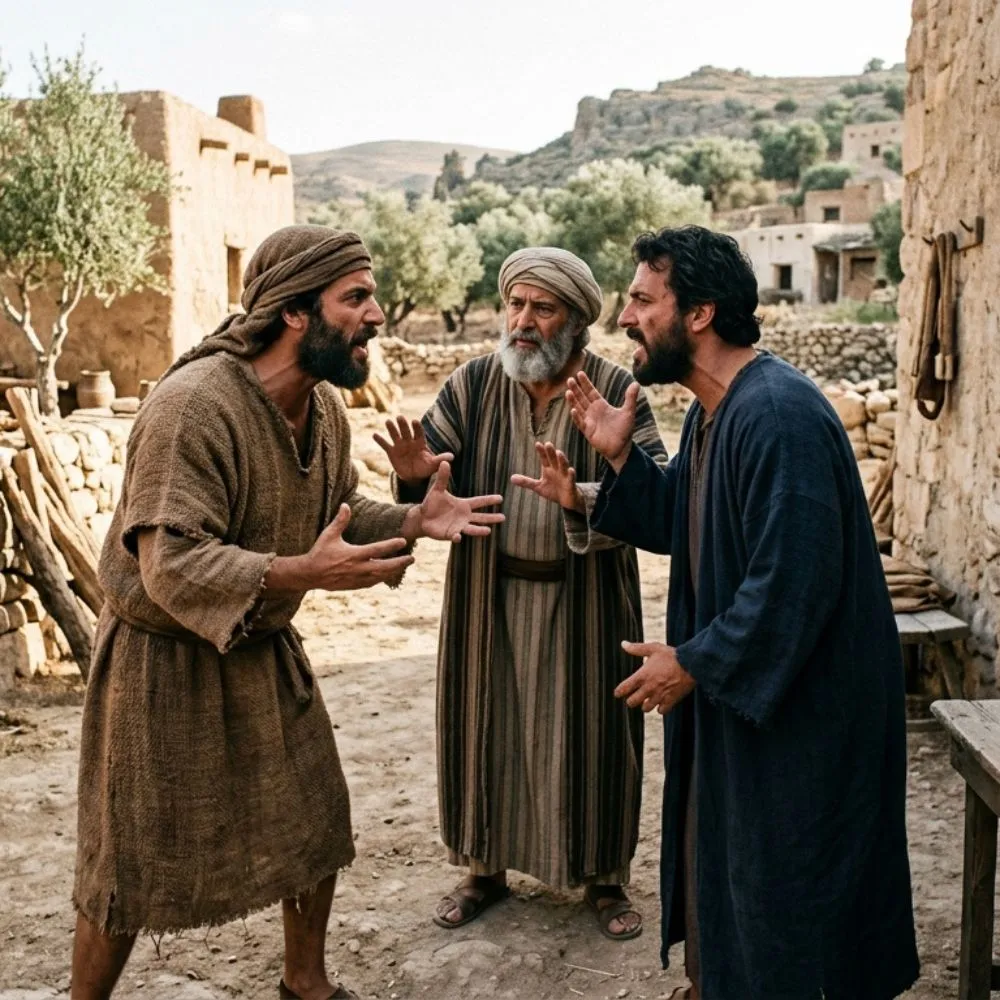
1. Proverbs 13:10
“Where there is strife, there is pride.”
This verse cuts to the core of why conflicts escalate. Pride refuses to back down, refuses to apologize, and refuses to listen. Every quarrel has a root, and the Bible identifies pride as the most common one. For believers, this verse is an invitation to check our own hearts before pointing fingers at others. When a conflict arises, asking “Am I being proud right now?” can change the entire dynamic.
Practical Lesson: Choose humility before the argument gets worse. One humble word can stop a fire before it spreads.
2. Proverbs 17:14
Starting a quarrel is like breaching a dam; so drop the matter before a dispute breaks out.
This proverb paints a powerful picture. A dam holds back enormous pressure — and once it breaks, the water cannot be put back. Arguments are the same. The wisest course is to address tension early, gently, and honestly before it becomes a flood that destroys everything in its path.
Practical Lesson: Deal with small tensions quickly and calmly before they become something you cannot control.
3. Galatians 5:19–21
Strife listed among “acts of the flesh
Paul includes strife alongside immorality, jealousy, and rage as evidence of living by the sinful nature rather than the Spirit. This is a strong reminder that conflict is not just a social issue — it is a spiritual one. Living by the Spirit produces peace; living by the flesh produces division.
Practical Lesson: When strife is present in your life, ask whether you are walking in the Spirit or yielding to the flesh in that area.
4. James 4:1
What causes fights and quarrels among you? Don’t they come from your desires that battle within you?
James brings the origin of strife back to the individual heart. External conflict is almost always fueled by internal unrest — unmet desires, frustrated expectations, and the craving for control. This verse does not excuse others’ behavior, but it reminds us that we are responsible for what lives in our own hearts.
Practical Lesson: Before addressing an external conflict, spend time with God examining what you are truly wanting or fearing in that situation.
5. Romans 12:18
If it is possible, as far as it depends on you, live at peace with everyone.
Paul is realistic here — he does not promise that peace is always achievable. But he makes clear that believers are responsible for their own part. We cannot control others, but we can control our response. The phrase “as far as it depends on you” places responsibility squarely on the believer’s shoulders, without guilt-tripping them over what they cannot change.
Practical Lesson: Do your part to pursue peace, and trust God with the rest. You cannot force reconciliation, but you can offer it.
6. Philippians 2:3
Do nothing out of selfish ambition or vain conceit.
This verse reveals the twin engines behind most strife: selfishness and pride. Paul calls believers to consider others better than themselves — a radical, countercultural posture. When we genuinely adopt this mindset, the hunger to win arguments and prove our worth begins to lose its grip.
Practical Lesson: Before entering a difficult conversation, ask yourself honestly: “Am I doing this for God’s glory or my own?”
7. Titus 3:9
Avoid foolish controversies and genealogies and arguments and quarrels about the law, because these are unprofitable and useless.
Not every argument is worth having. Some disputes are genuinely pointless — they go in circles, produce heat but no light, and leave everyone worse off. Paul urges Titus to steer clear of these kinds of controversies. Wisdom knows when to engage and when to walk away.
Practical Lesson: Ask yourself, “Will this conversation produce fruit?” If not, it may be wiser to disengage with grace.
❓ FAQs
What does strife mean in Hebrew?
In Hebrew, the main word for strife is madon (מָדוֹן), meaning contention or quarreling. Another key word is riv (רִיב), which refers to a dispute or controversy, sometimes used in a legal context.
Is strife a sin in the Bible?
Yes, the Bible clearly presents strife as sinful. Paul lists it as a “work of the flesh” in Galatians 5:19–21, alongside immorality and idolatry. Proverbs 6:19 states that God hates those who stir up conflict.
What is the spiritual meaning of strife?
Spiritually, strife represents the outward fruit of inward sin — particularly pride, jealousy, and selfish ambition. It symbolizes a heart that has not fully submitted to God’s authority or embraced His love.
Why does the Bible warn against strife so strongly?
Because strife destroys what God builds. It tears apart families, divides churches, and poisons communities. The Bible warns against it because God is deeply committed to love and unity among His people.
How can Christians avoid strife?
Christians can avoid strife by cultivating humility, choosing their battles wisely, listening before speaking, and making prayer the first response to tension. Proverbs 15:1 reminds us that a gentle answer turns away anger.
Conclusion:
The strife meaning in the Bible is simple: it is conflict that grows from pride, selfishness, and sin. God calls His people to choose peace, forgiveness, and humility instead of arguments and division.
If you are facing strife today, pray and ask God to change your heart. Follow the example of Jesus, who chose love over conflict.
With God’s help, broken relationships can be healed, and His peace can fill your life.
Read More Post:
Constantine Meaning in Bible: History, Faith And Legacy
What Does 444 Biblically Mean? Truth Every Christian Should Know
Vain Meaning in the Bible: Biblical Meaning & Spiritual Lessons